By Derek Williamson
Daddy to Rachel
Trisomy 18
December 20, 2023 – May 25, 2025
We had been trying to get pregnant for seven years, including multiple attempts at IUI and IVF. When we finally decided to pursue adoption, no sooner had the first check cleared the bank than we learned we were pregnant.
Initially, we had the traditional mindset—tracking growth on a pregnancy app, browsing baby aisles, planning a nursery, and imagining a future with our child.
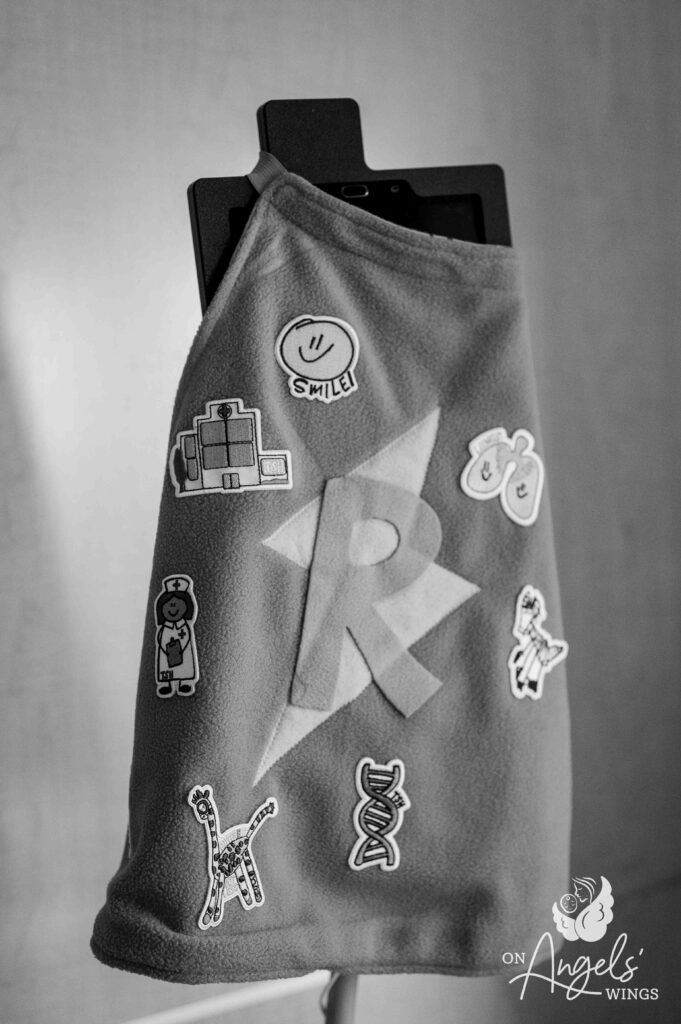
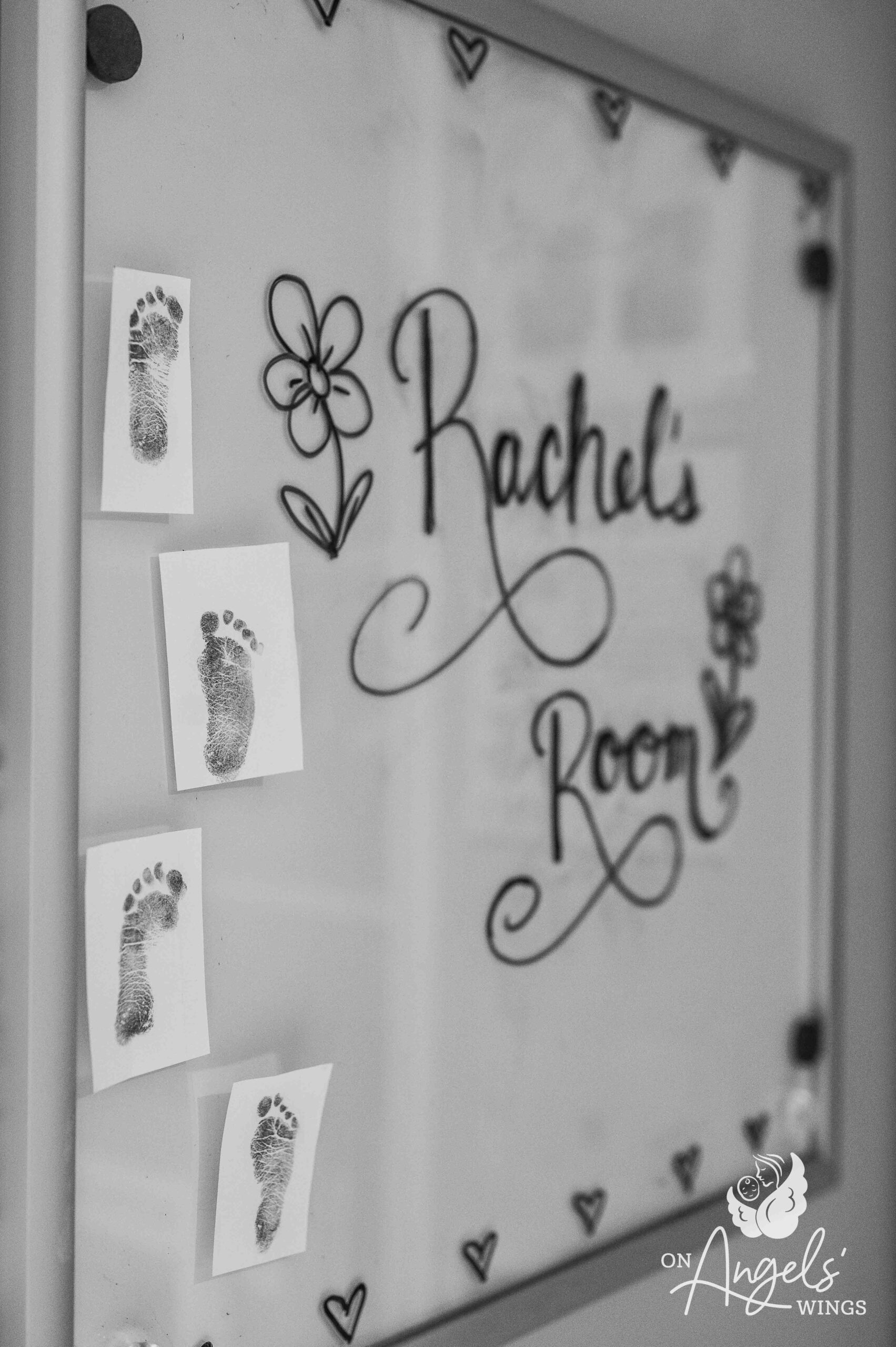
At 13 weeks, Claire’s water broke. Miraculously, the placenta somehow resealed and fluid levels remained stable. What followed were six months of bed rest, weekly doctor appointments, and living carefully at all costs.
At 16 weeks, our very supportive OB called with the diagnosis: Trisomy 18. That led to an appointment to discuss options and many maternal-fetal specialty clinic visits throughout the rest of the pregnancy. We were told by multiple high-risk clinics, “Don’t buy anything. You’re not going to need it.” Refusing to give up hope, we continued preparing for our baby’s arrival—expecting the worst, but hoping for the best.
When we first received the diagnosis, the world suddenly felt bleak. Every appointment carried the same mournful refrain: “But your child has Trisomy 18.” Over time, however, we gained knowledge and experience. We began educating friends, family, and even members of the medical community. Trisomy children are not just their diagnosis. They are individuals. Their medical dysfunctions, severities, and needs differ. They can be genuinely happy, outgoing, and personable. Above all, they deserve a chance at life instead of being ruled out because of outdated data and teachings.
We were originally given a due date in January 2024. However, during a December appointment, we were told that delivery would be scheduled by C-section for December 20, 2023. As that day approached, the atmosphere grew increasingly somber. We were told to expect a stillbirth. Our families met us in St. Louis, praying they would get to meet her. Our church elders created a schedule so that someone would always be with the three of us when she passed.
The delivery room was filled—not just with the usual medical team, but with multiple specialty teams prepared for dire medical need. I remember when she arrived, seeing additional team members standing there, wondering why they were needed, and overjoyed at the stable—though medically fragile—miracle they had just witnessed enter the world.
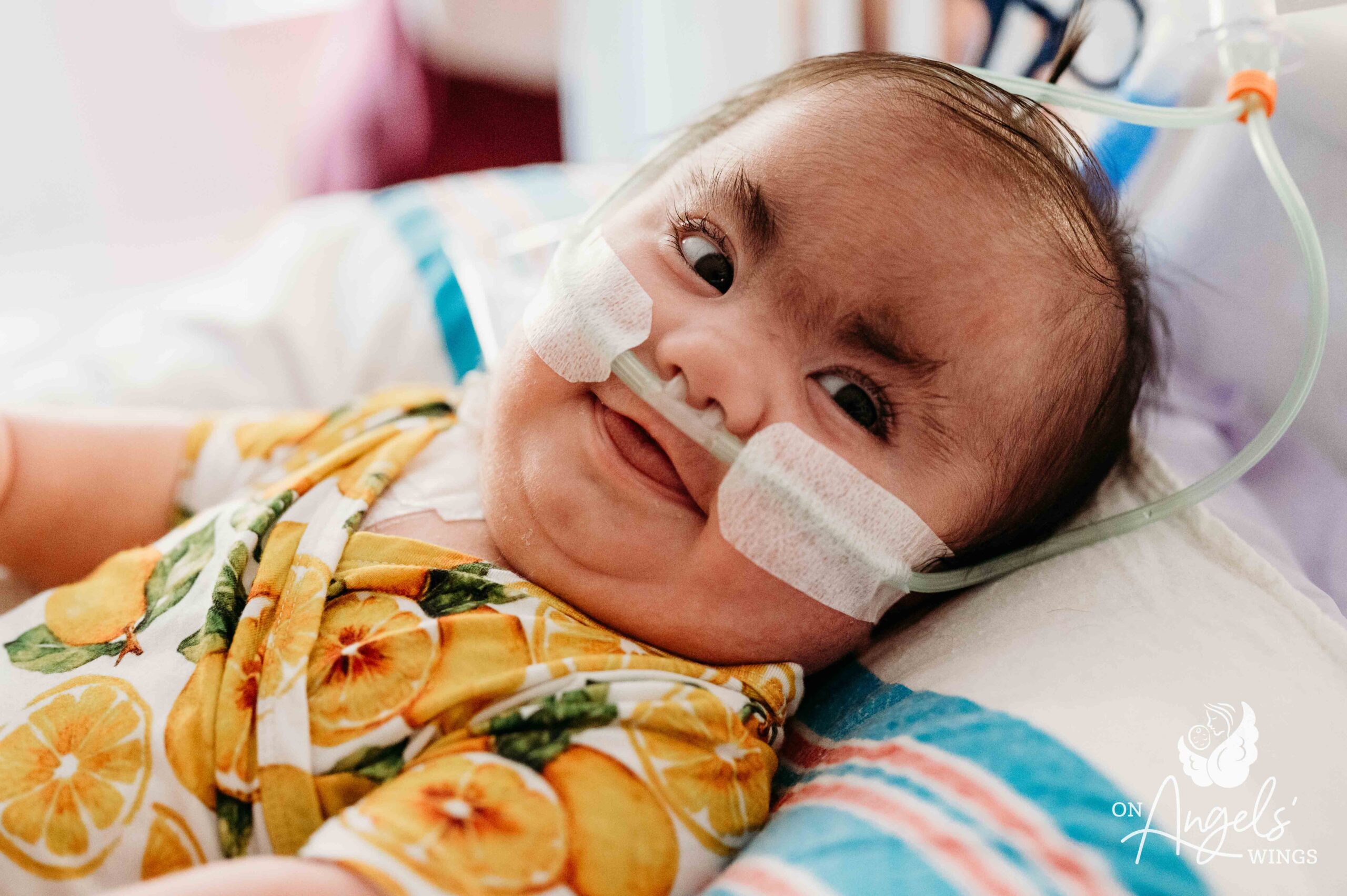
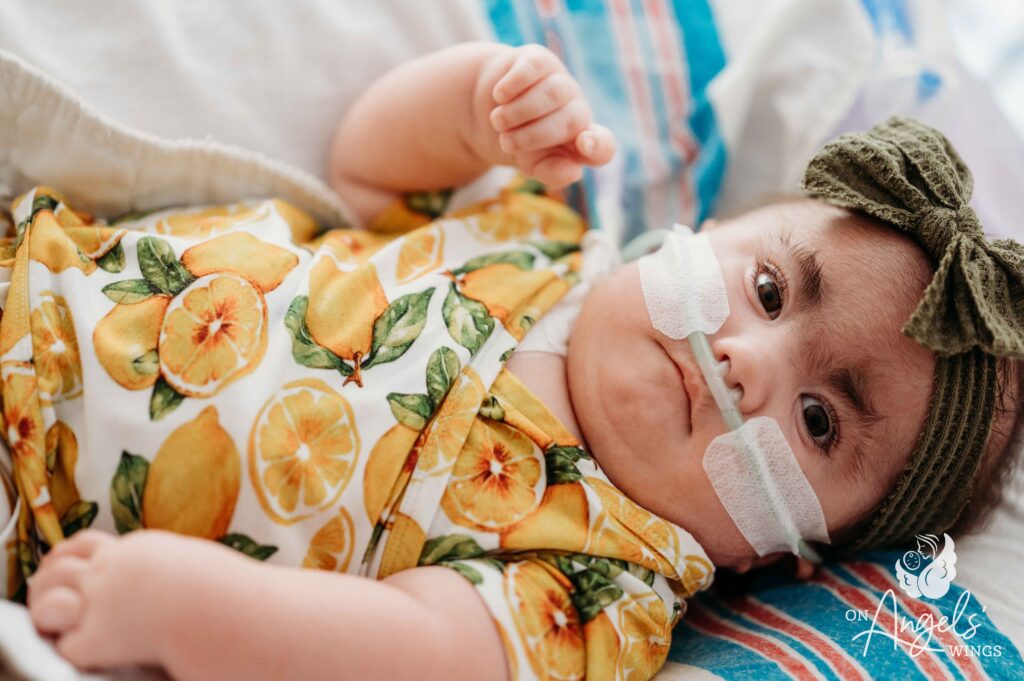
Rachel spent her entire life hospitalized. She was first admitted to St. Louis Children’s Hospital NICU for 11 months. For the first three months, we were together as a family thanks to paternity leave. When that ended, Mommy became a full-time advocate, while Daddy was two hours away during the workweek, only able to be a husband and father on weekends or during midweek procedures or crises. Rachel was transferred to Ranken Jordan Pediatric Bridge Hospital for two weeks, before returning to St. Louis Children’s for approximately six months in the PICU with pneumonia and atelectasis. She would never leave the PICU.
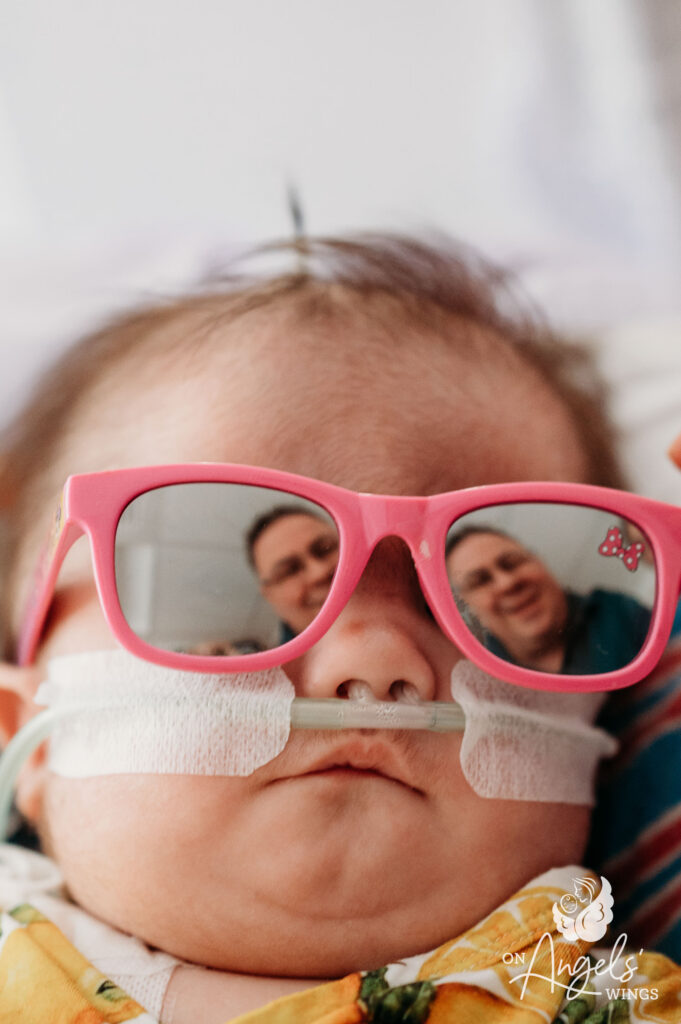
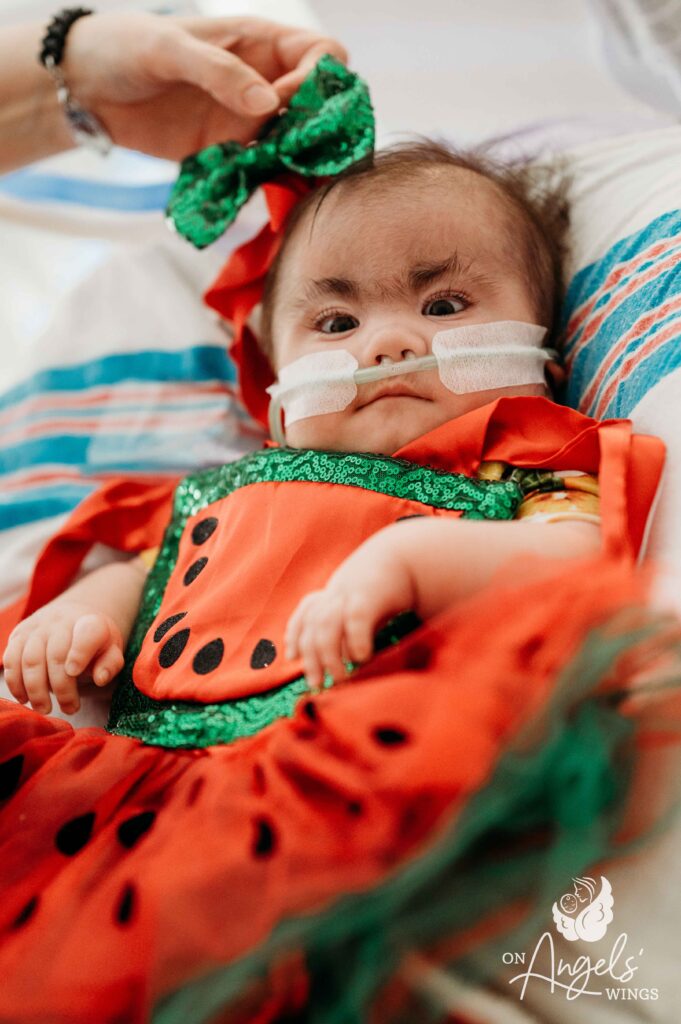
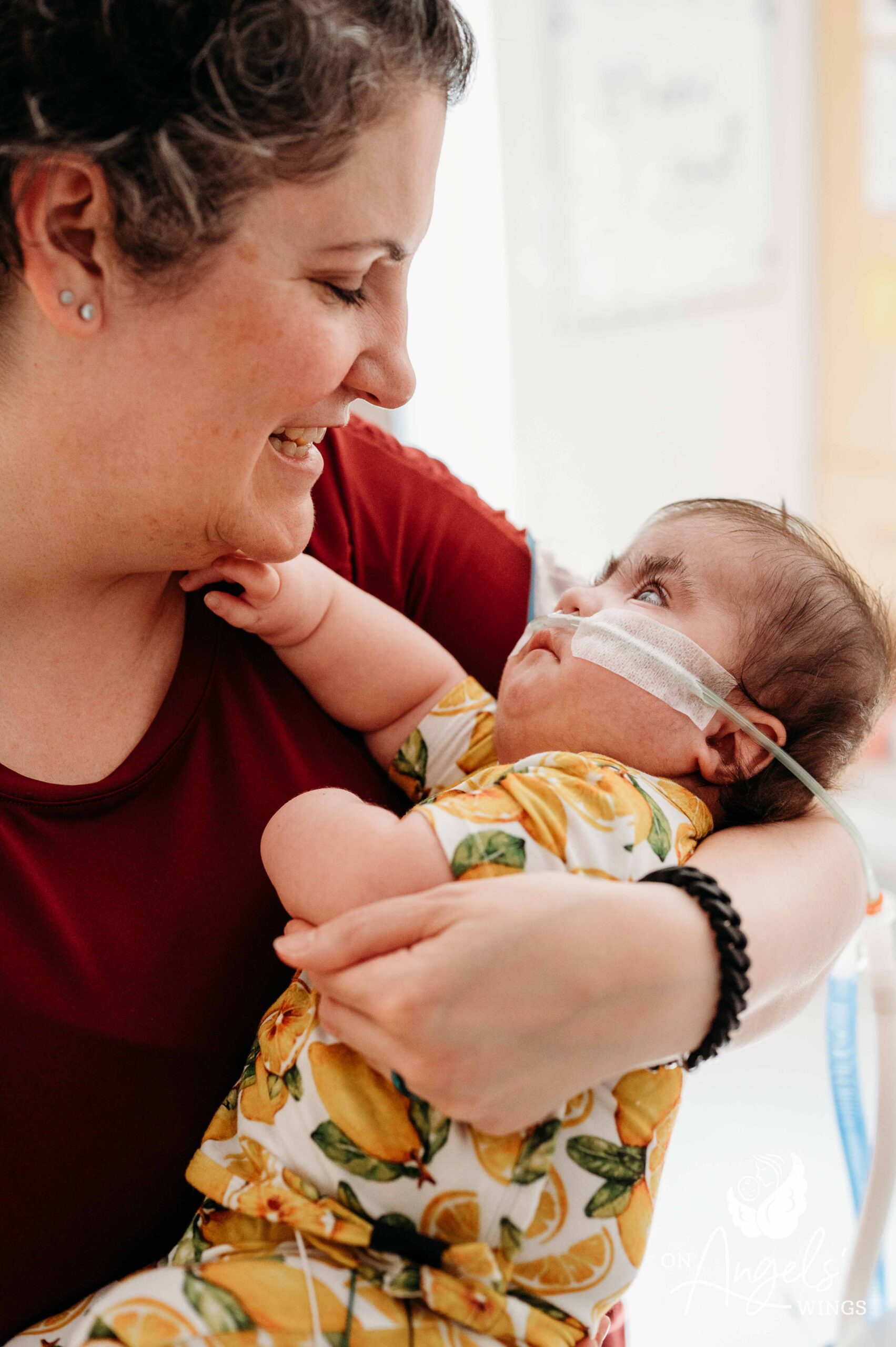
Without typical childhood stimulation, Rachel often lagged developmentally. Field trips included helmet fittings, CT scans, and one “healthy” trip to the garden—experiences that may as well have been on another planet. Yet despite her limited world, she learned who her people were. She learned how to laugh and smile. And she developed the most wicked side-eye ever given by a baby.
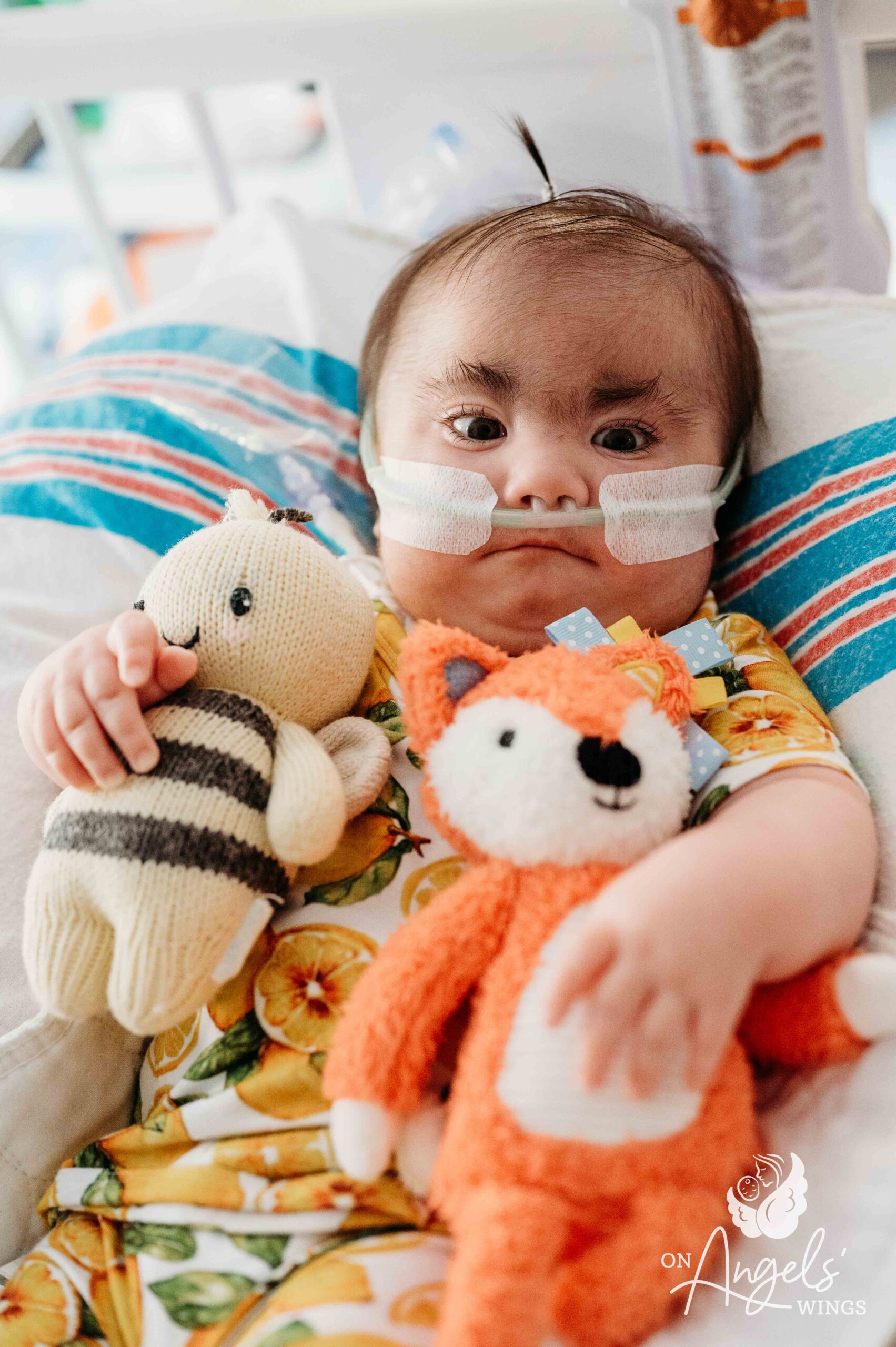
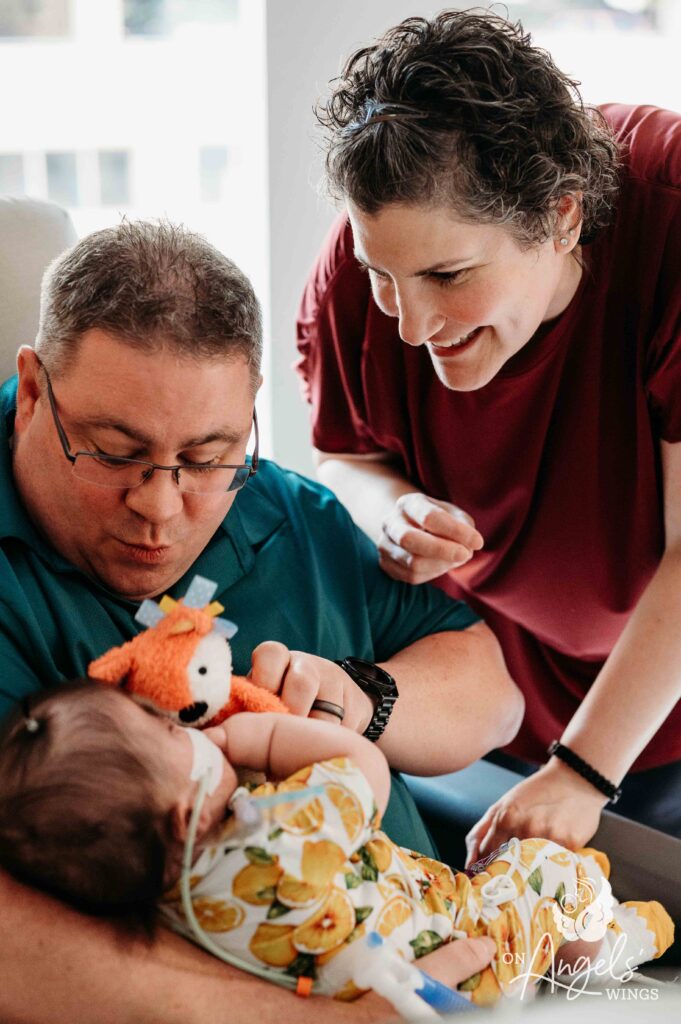
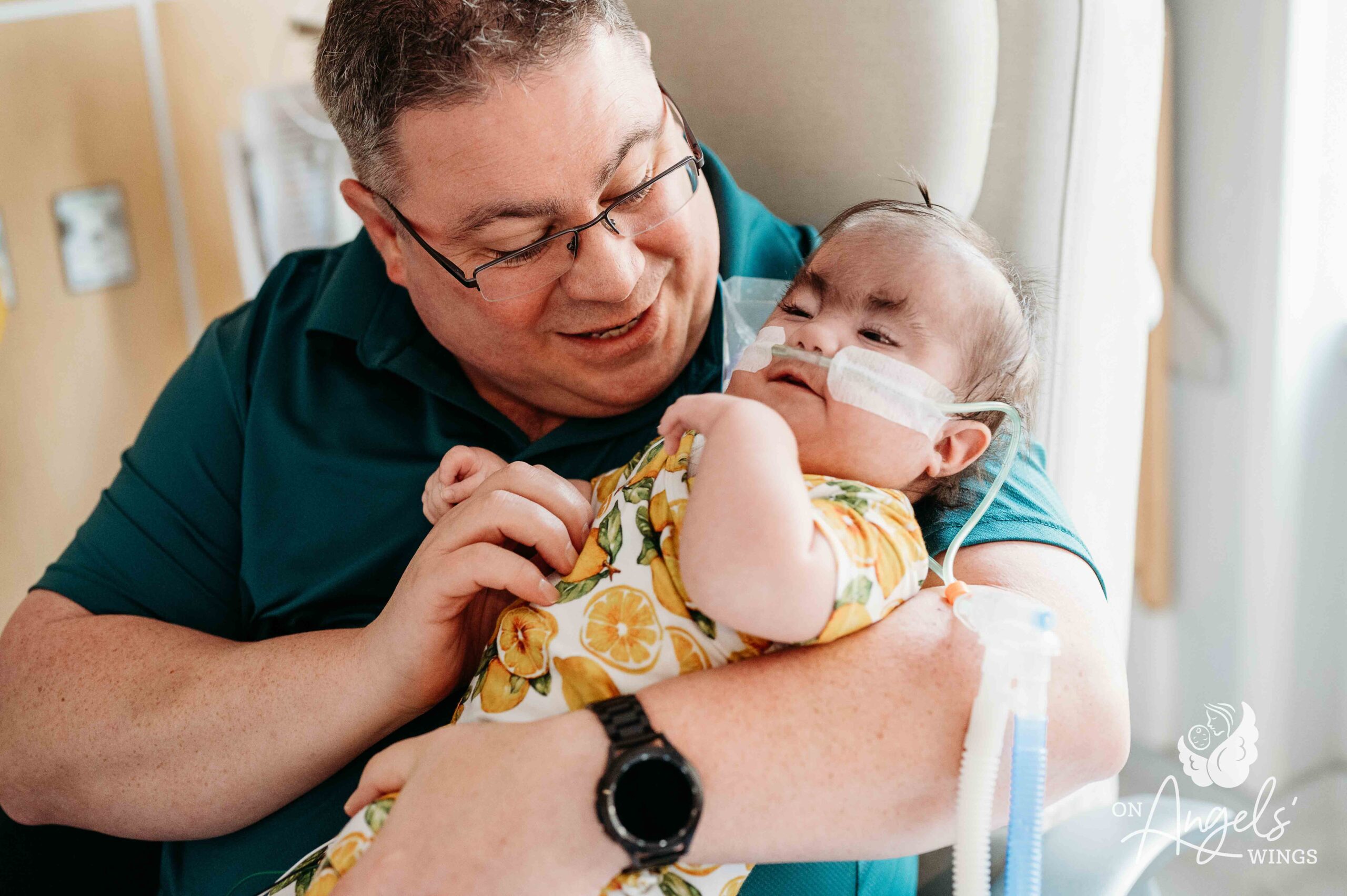
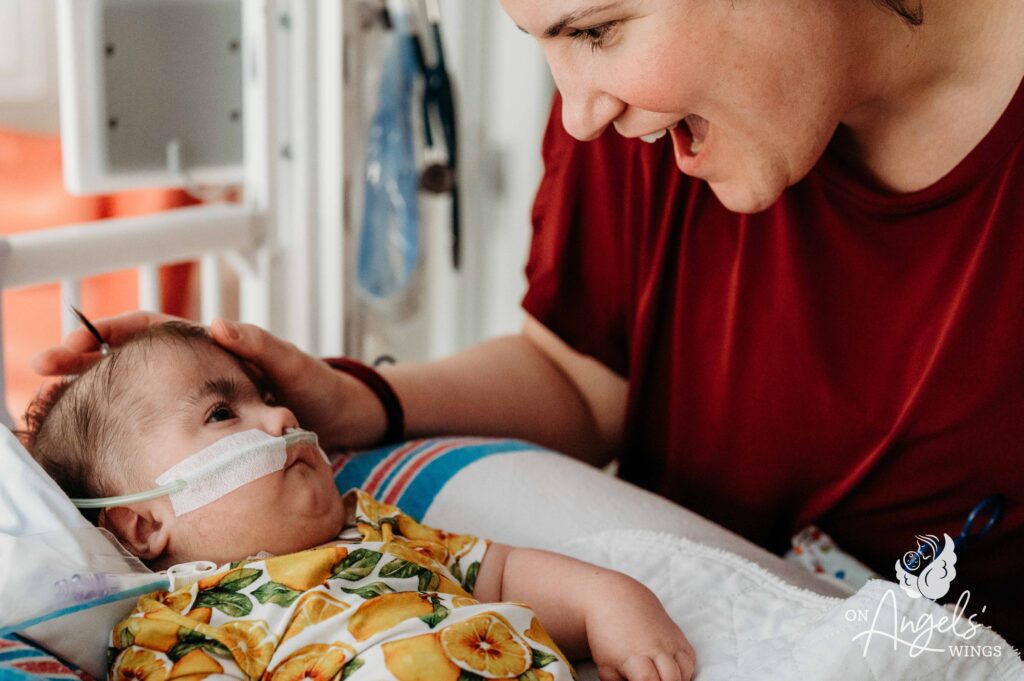
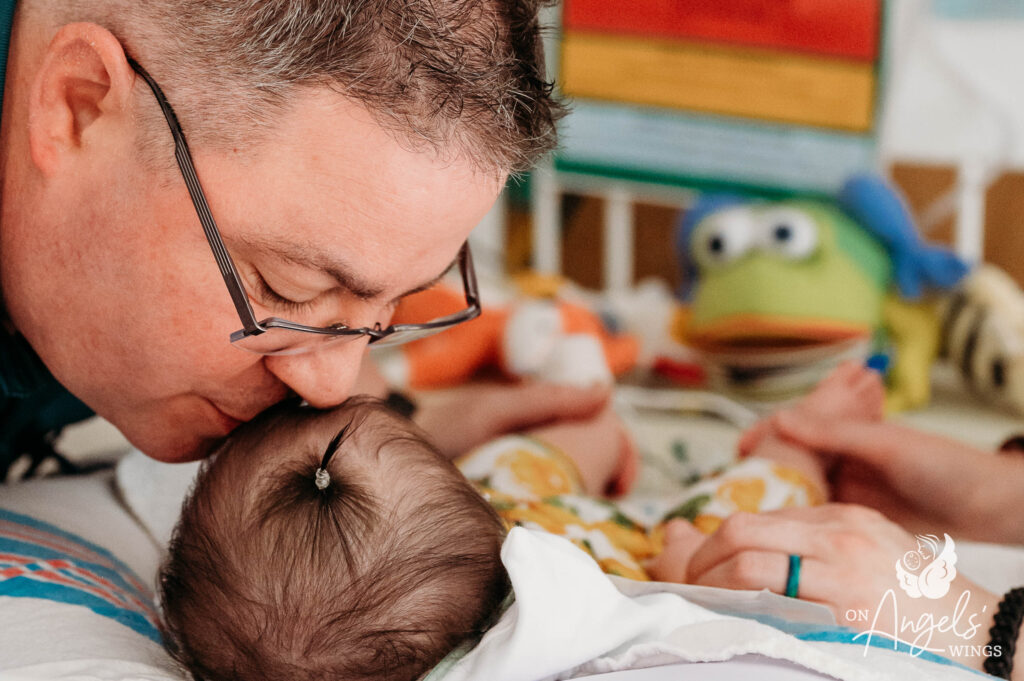
Rachel was adored by everyone who met her. She was incredibly fashionable, giving fashion shows to the nurses at the start of each season or growth spurt. She wasn’t much for television, but she enjoyed Beauty and the Beast, Hotel Transylvania, and loved watching St. Louis Blues hockey while sitting on Daddy’s lap. She was the baby nurses would go to talk or vent to. Being given the side-eye by Rachel was worn as a badge of honor in the NICU. Even nurses filling shifts from other areas had already heard about her. She seldom cried—even in the worst circumstances. Her smile could melt anyone’s heart. She loved being the center of attention, but only at her discretion. She will forever be known as “Little Miss Sassypants.”
Rachel passed on May 25, 2025.
Every day since has been a reminder of our loss. We can still hear her laugh and feel her gripping our fingers, only to remember that this time it isn’t real. Sadness can arrive without warning at the most fleeting memory. Some cards remain unopened because reading them is still too difficult. Friends offer help, asking us to reach out if we need anything, not realizing that the only thing we truly need is our child back.
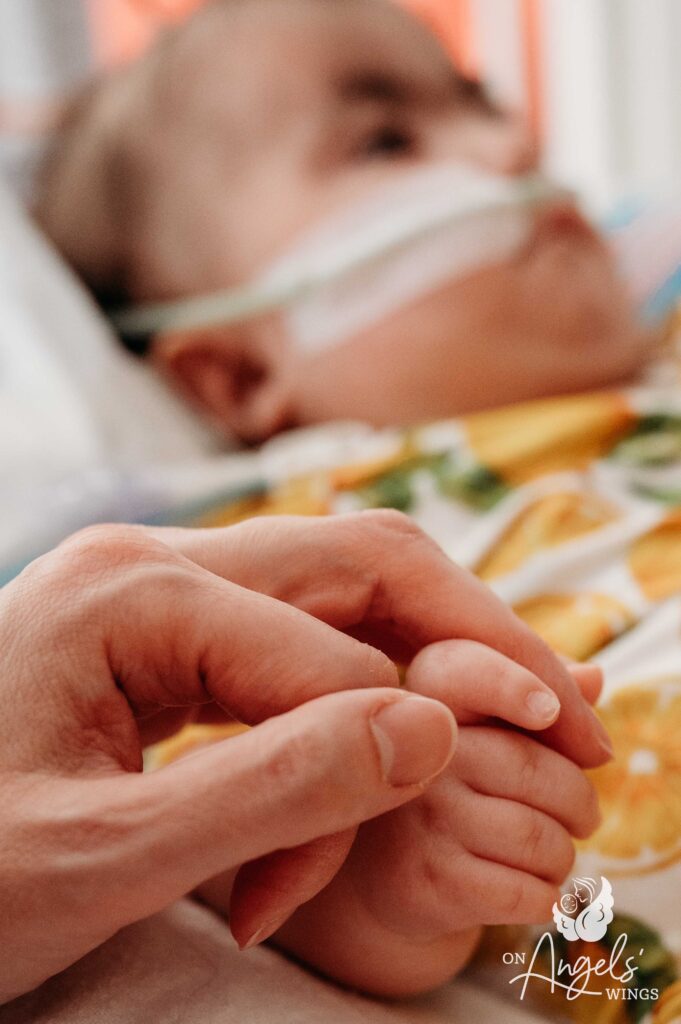
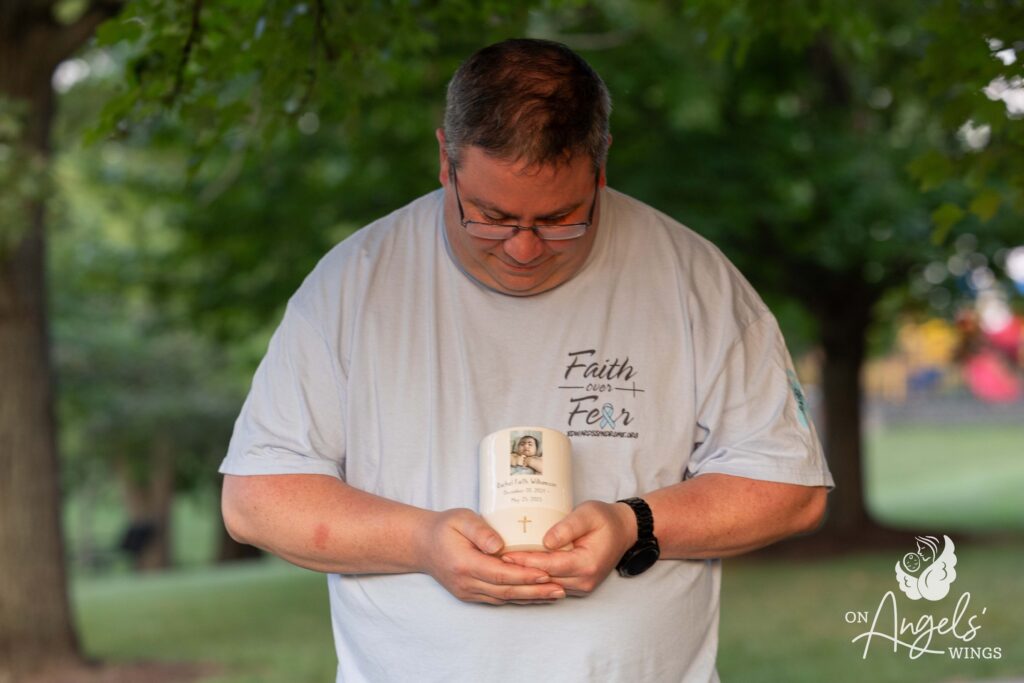
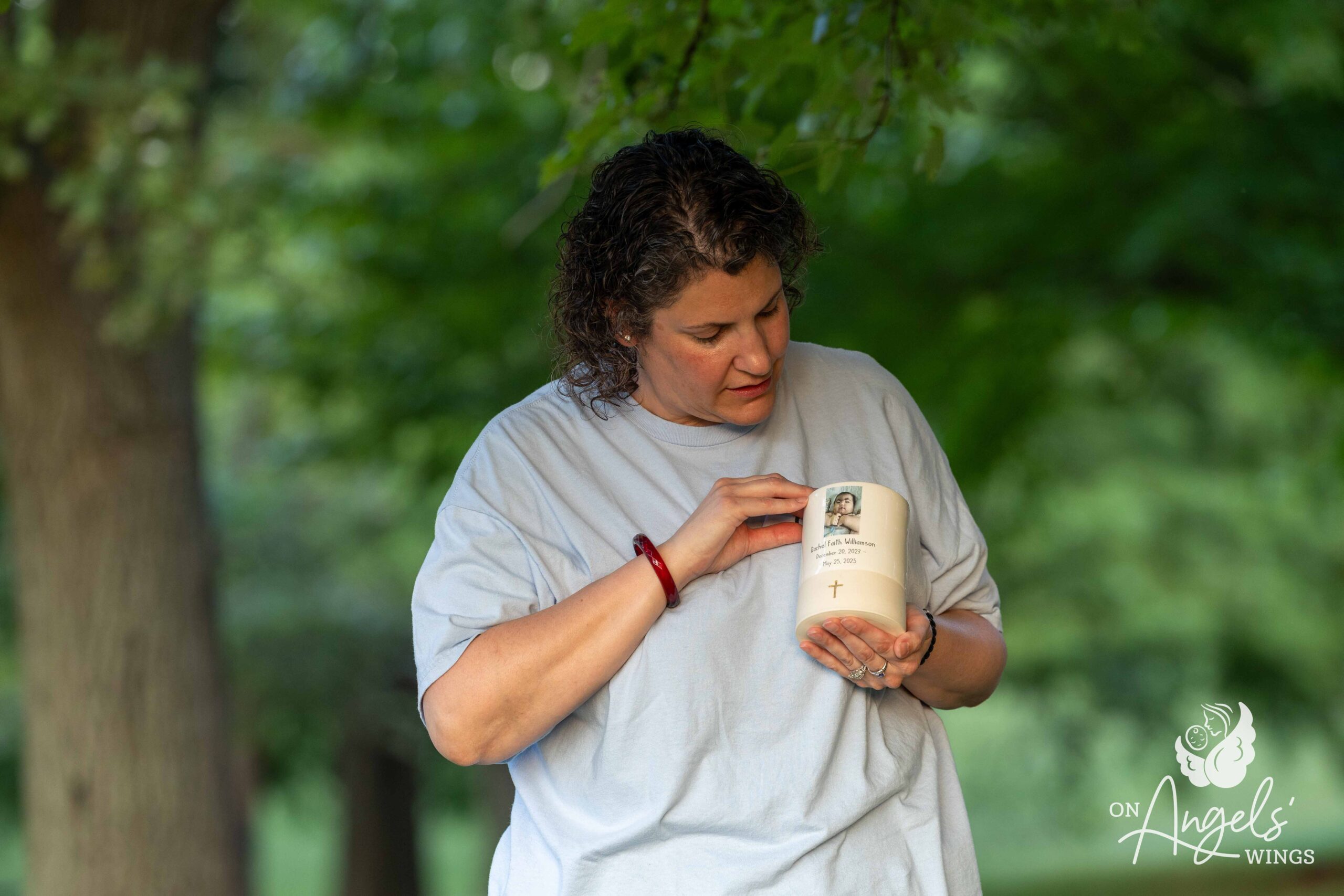
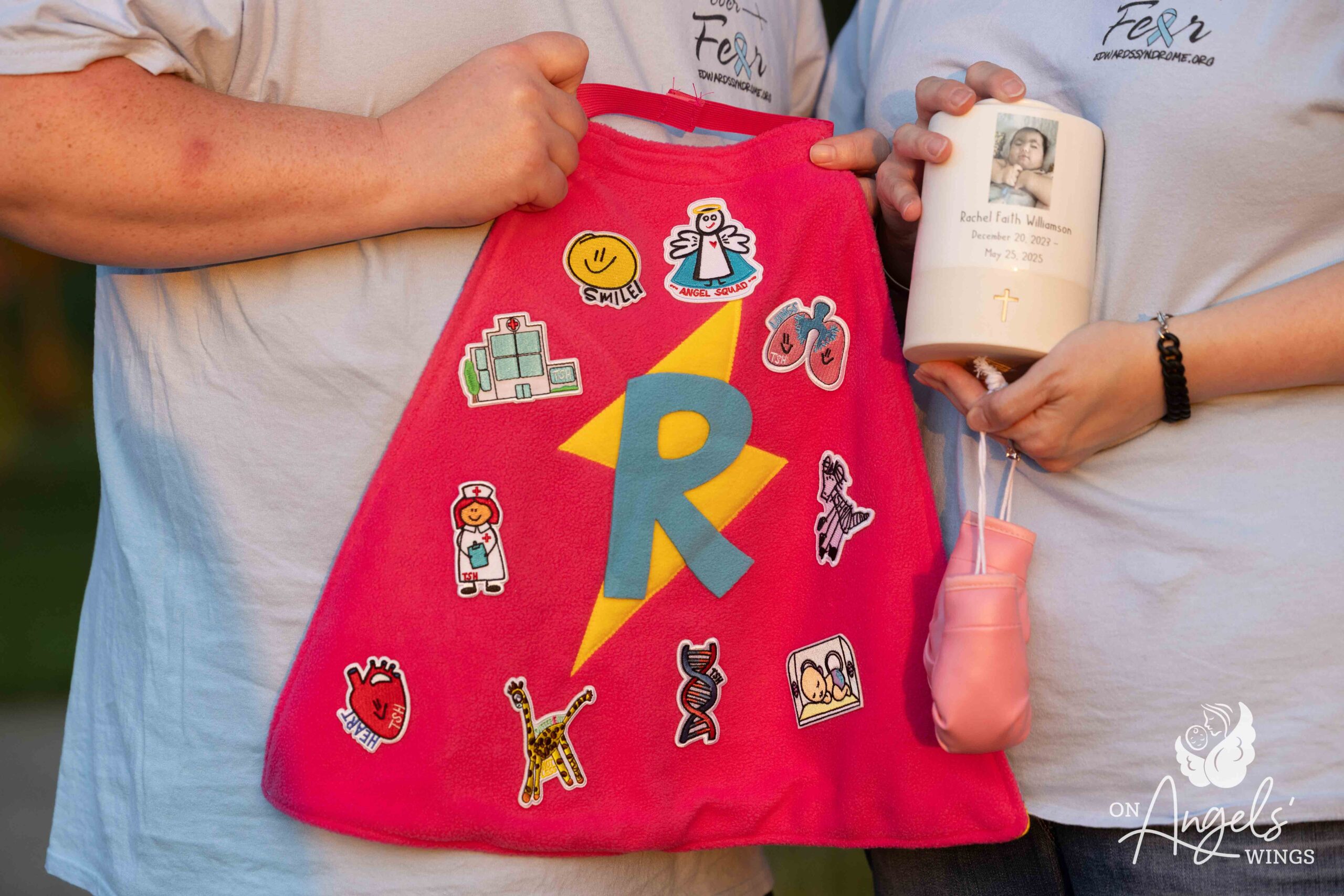
As a couple, we are rebuilding a marriage fractured for all the right reasons. Mommy struggles to find purpose now that every waking second was once dedicated to advocating for Rachel. One of the hardest moments was picking up her urn. Yet there is indescribable solace in knowing she is finally home with us.
We continue to honor Rachel’s legacy. Children’s books have been purchased and donated in her memory. A Vacation Bible School curriculum was bought for our church, and her picture will be placed on the main set each year it is used. We tell others about her. We share our experiences with families walking their own trials. As time passes and wounds begin to heal, we hope to become more active in education and advocacy, pushing for more research. We also still hope for a younger sibling for Rachel—naturally or through adoption. Having known the love of a parent for their child is something we long to continue.
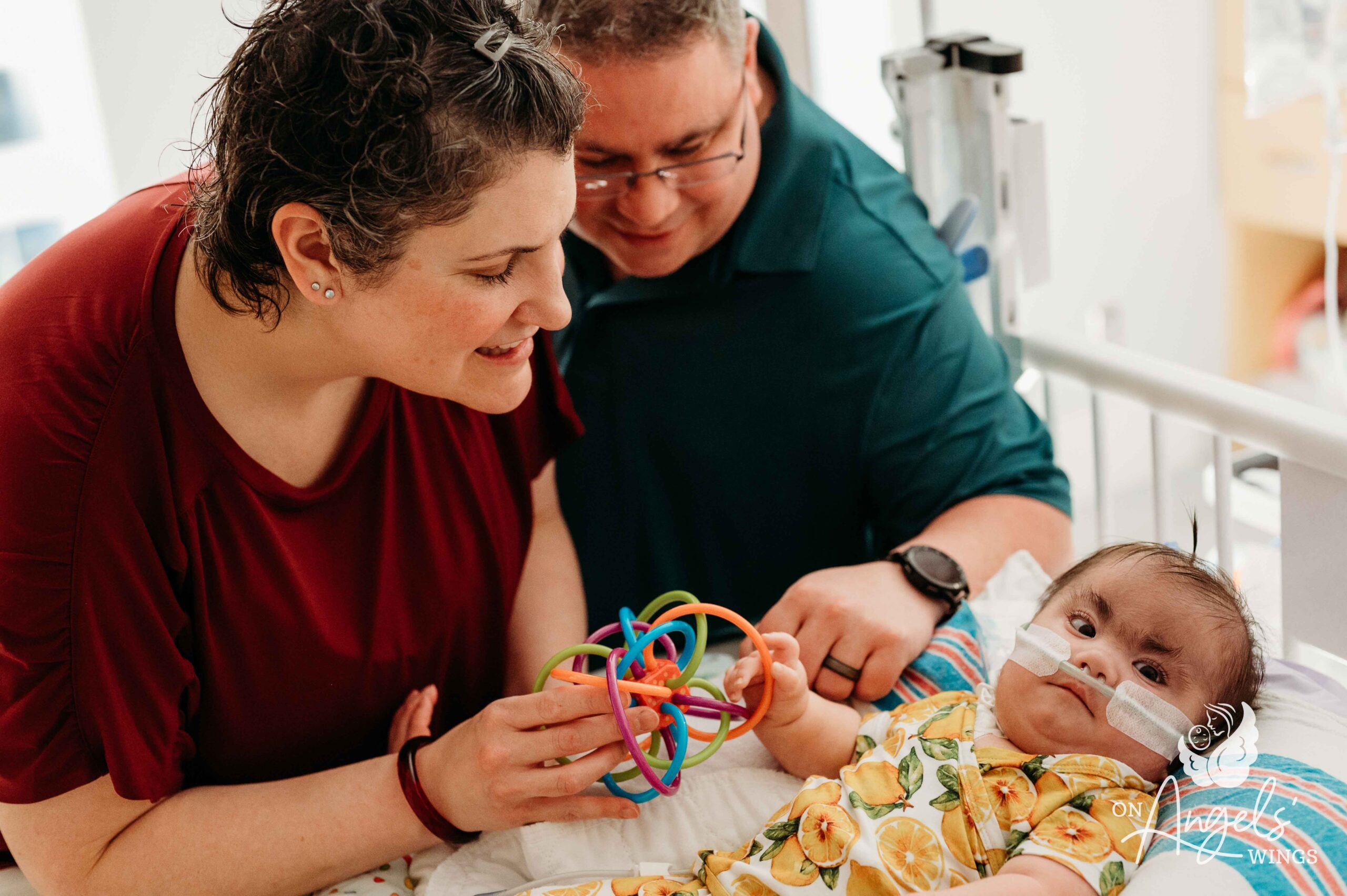
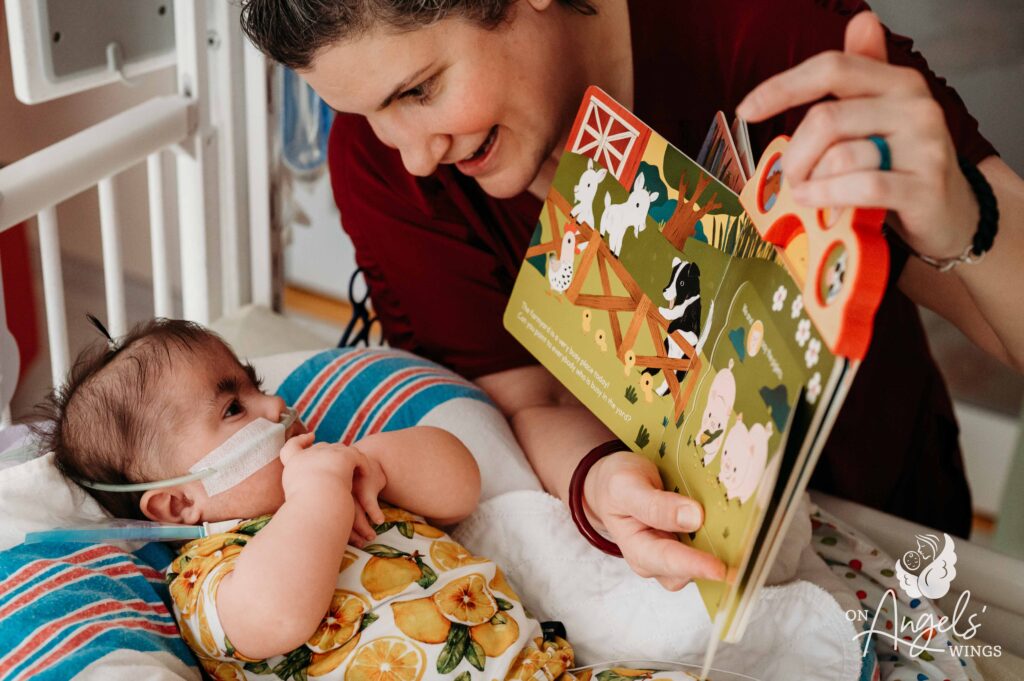
We were first introduced to On Angels’ Wings through the Maternal Fetal Medicine Clinic. Although our first session did not take place until August 2024, it was our first true family photoshoot. The photographer was incredibly accommodating and creative. Some of the pictures we had initially been skeptical about have become some of our most treasured. Those images now carry memories that have woven themselves into life without our daughter.
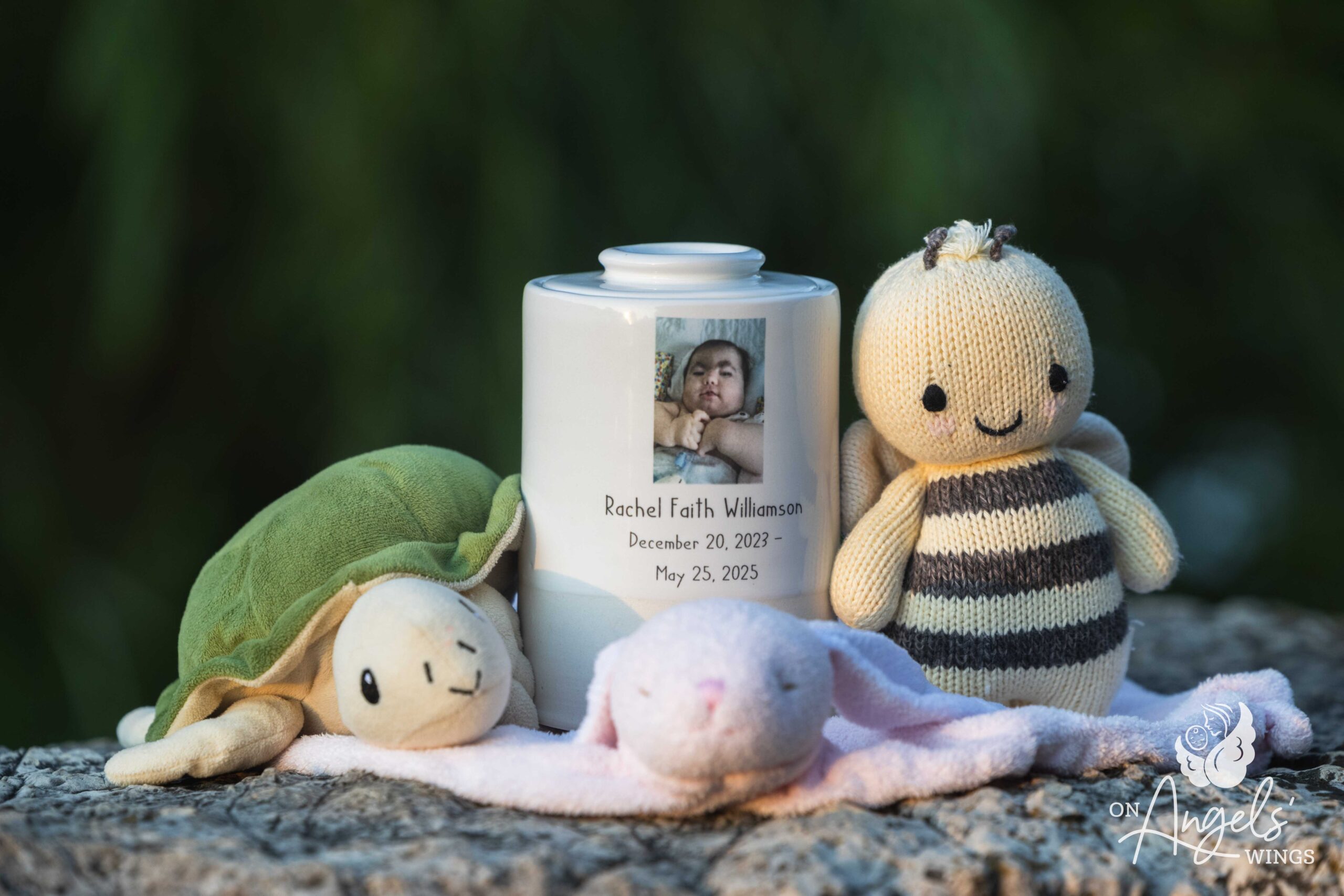
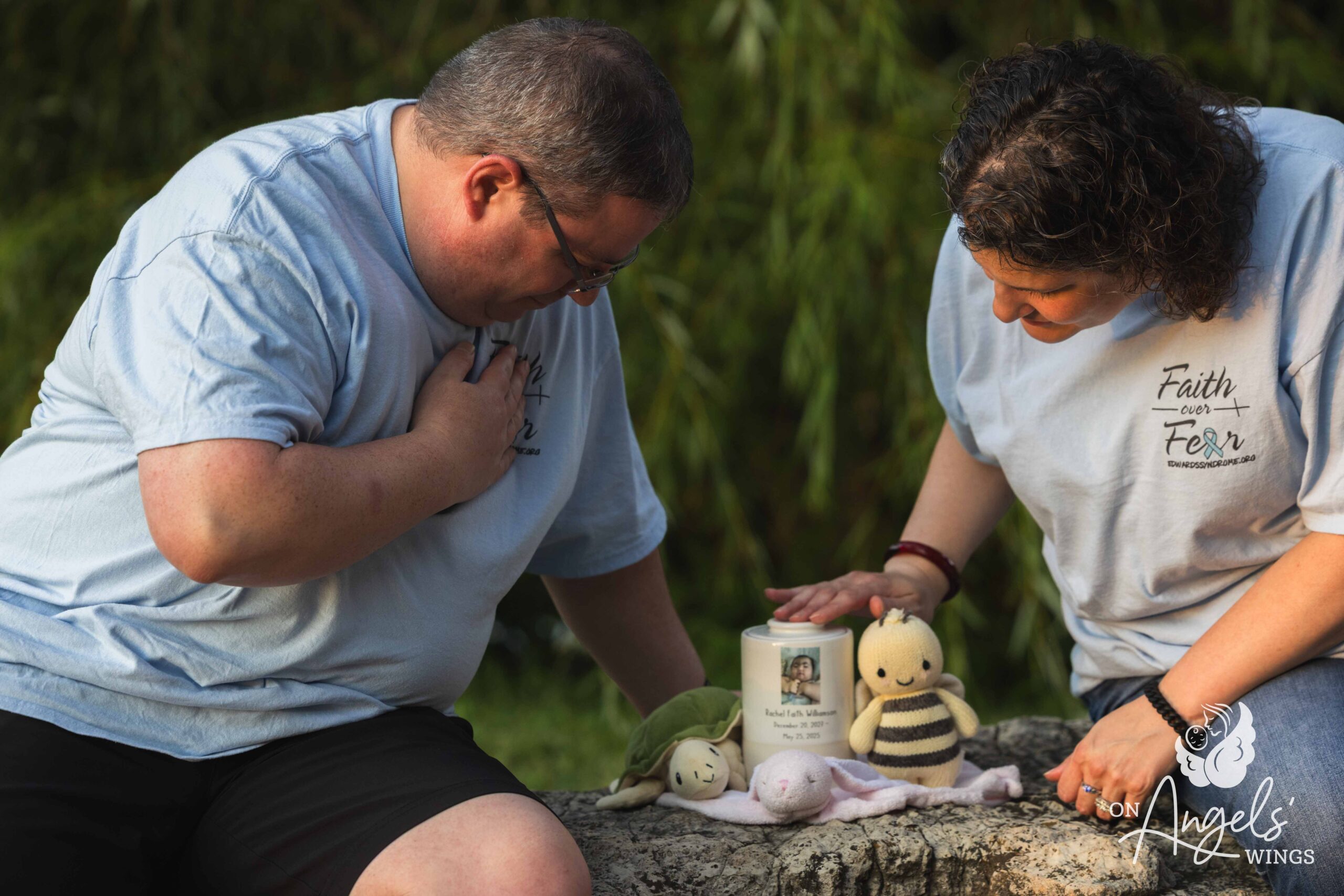
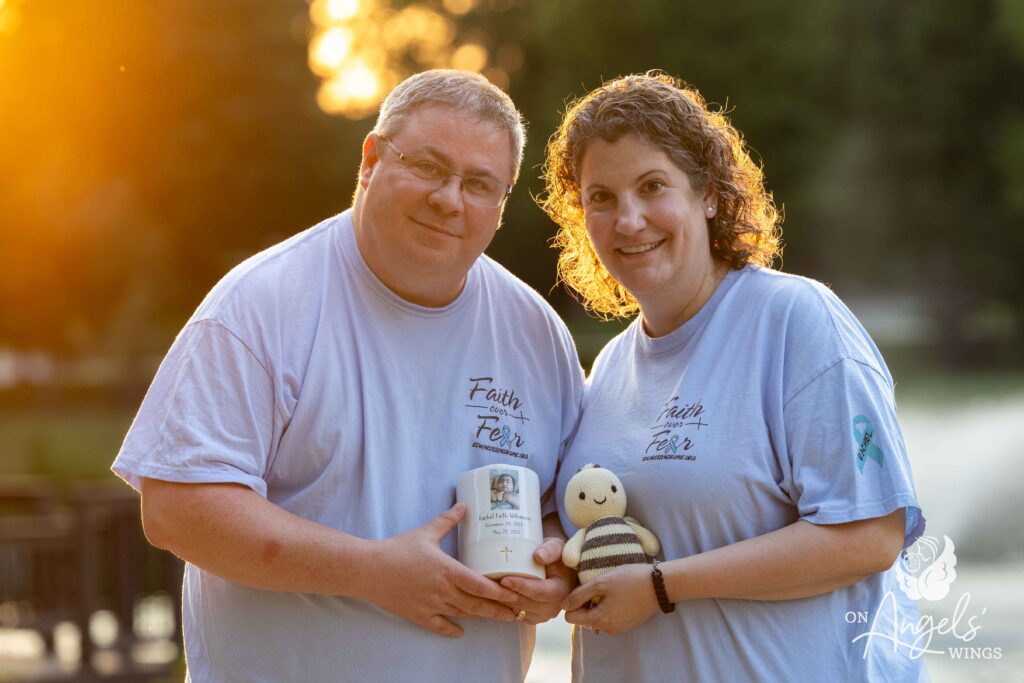
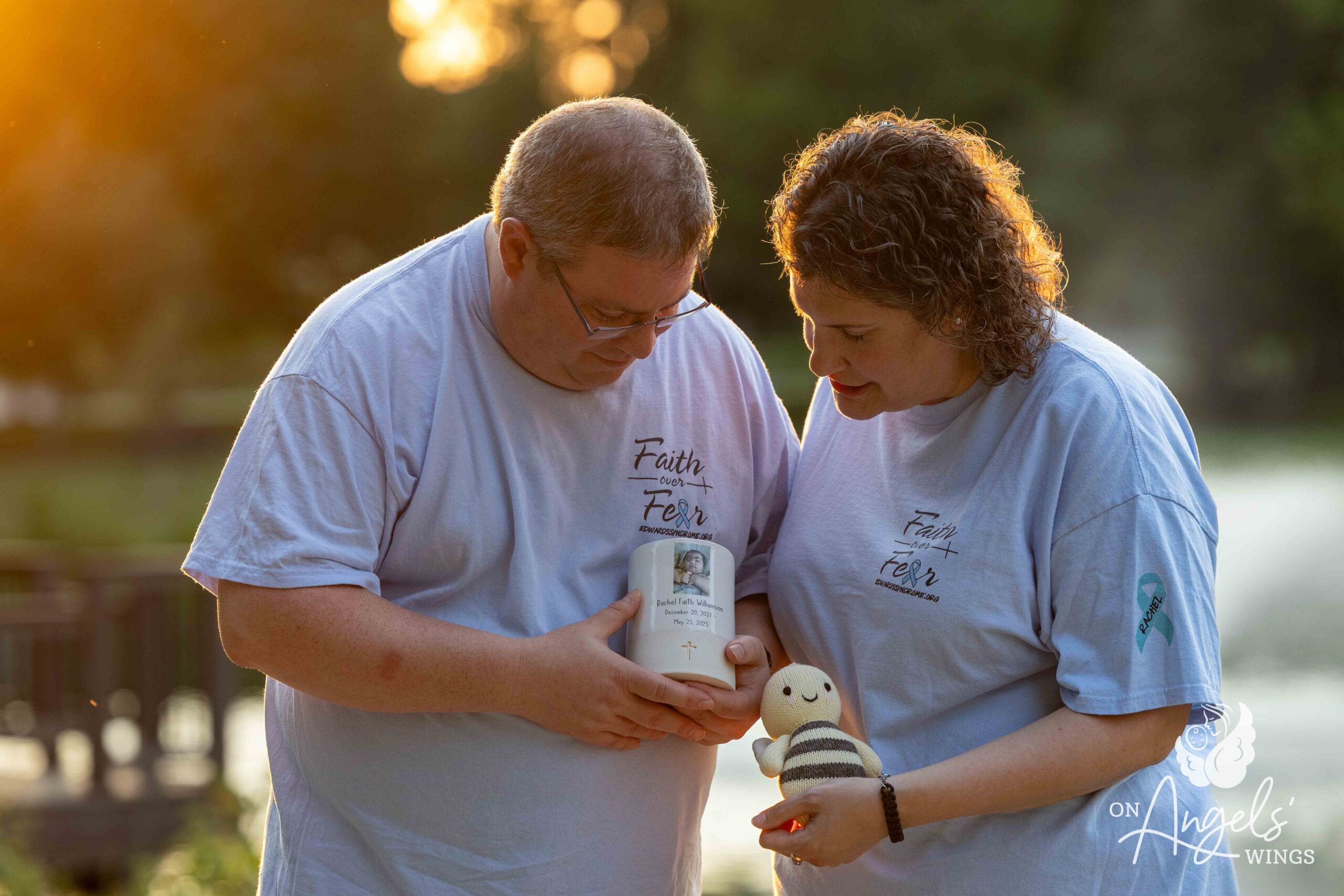
After Rachel’s passing, we were able to participate in a mini remembrance session in August of last year, bringing her urn and special items. That experience reminded us that Rachel—and we—have not been forgotten. The sessions have held both joy and sorrow, but they have been cathartic. They gave us space to face her passing while also holding onto fond memories.
The photo sessions have been inspiring for us—before and after her passing. They preserve moments that might otherwise be lost to the sterile hospital environment. We have recommended On Angels’ Wings to other parents because of the compassionate experience we had and the professional-quality images that families in hospital settings might not otherwise have access to.
Rachel deserved to be seen—not just as a diagnosis, but as our daughter. Through these images and through the lives she touched, she continues to be.