By Marissa Hicks
Mommy to Kinsley
CDK19, Hypotonia, Pica
Born May 2021
Kinsley’s journey began at birth when she was born prematurely and admitted to the NICU. She spent three months there before she was finally able to come home after receiving a G-tube.
Those three months in the NICU were the hardest thing I’ve ever been through. Every single day was filled with questions I didn’t have answers to. I kept wondering, Is my daughter going to make it? And if she did, what would life look like when we finally brought her home?
I didn’t know how to prepare for raising a child with special needs. I didn’t know what the future held. All I knew was that I was scared.
It was lonely in a way I can’t fully explain. Even with people around me, it felt like no one truly understood the weight I was carrying—the constant worry, the unknowns, the exhaustion. It all sat heavy on my heart. Looking back, it was one of the scariest seasons of my life. But it was also the season that showed me just how strong a mother can be when she has no other choice but to keep going.
In the beginning, my only hope was that she would live.
At that point, we didn’t have answers. Kinsley wasn’t diagnosed with anything until after she was born, and we spent that first year searching for reasons behind everything she was experiencing.
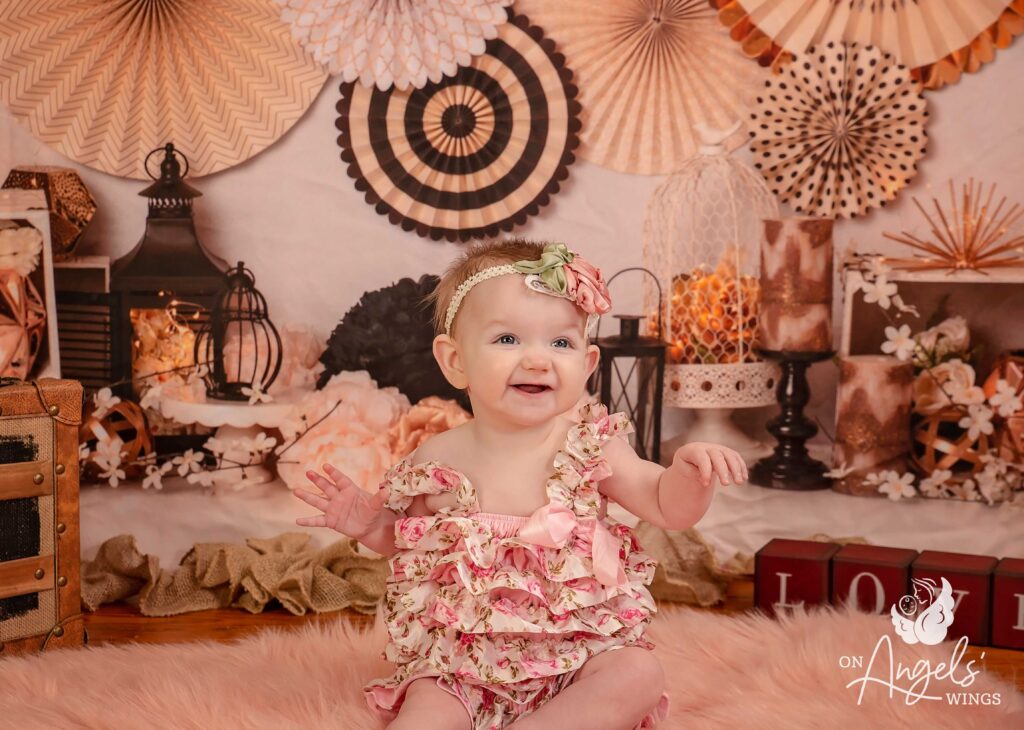
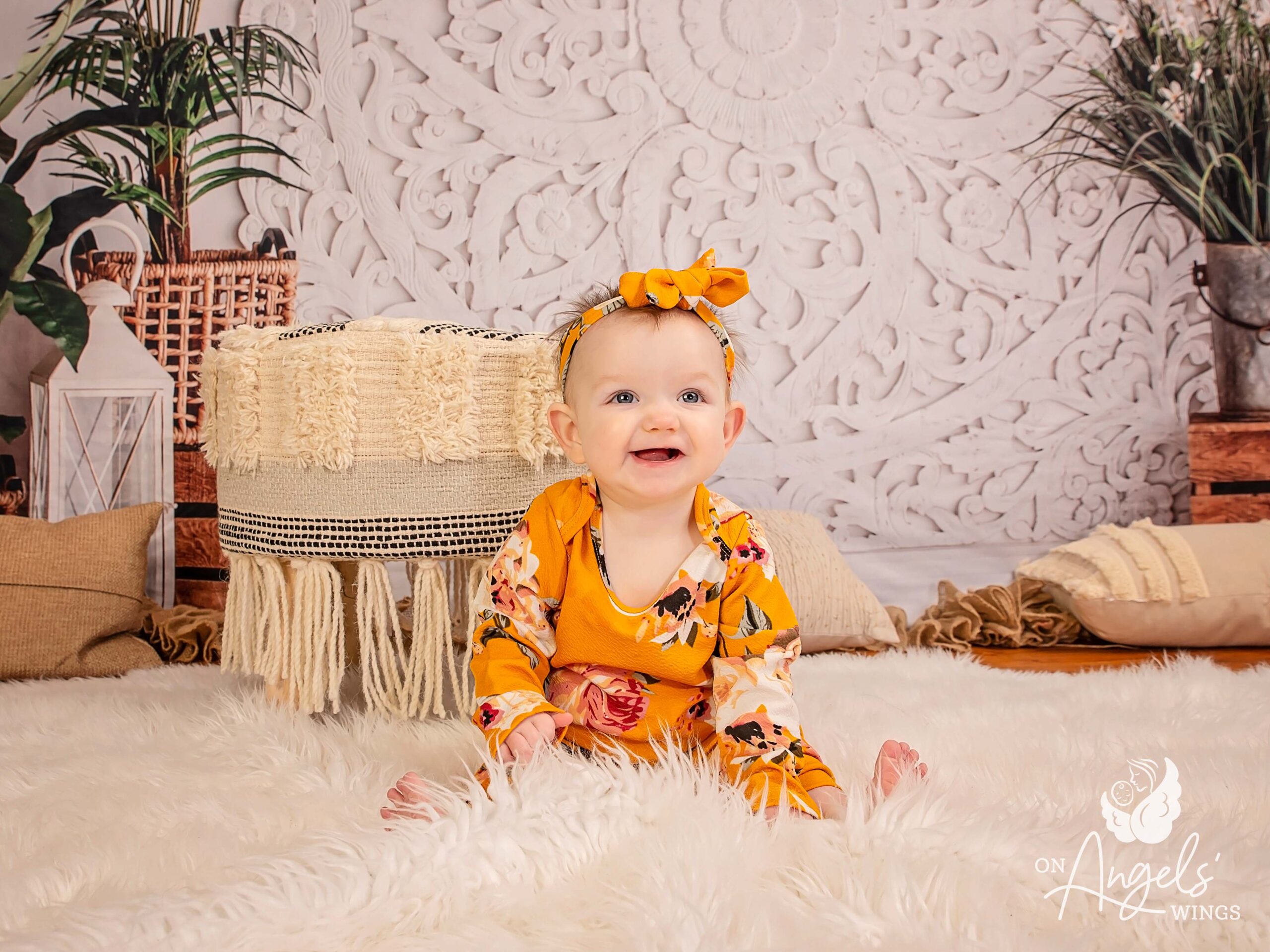
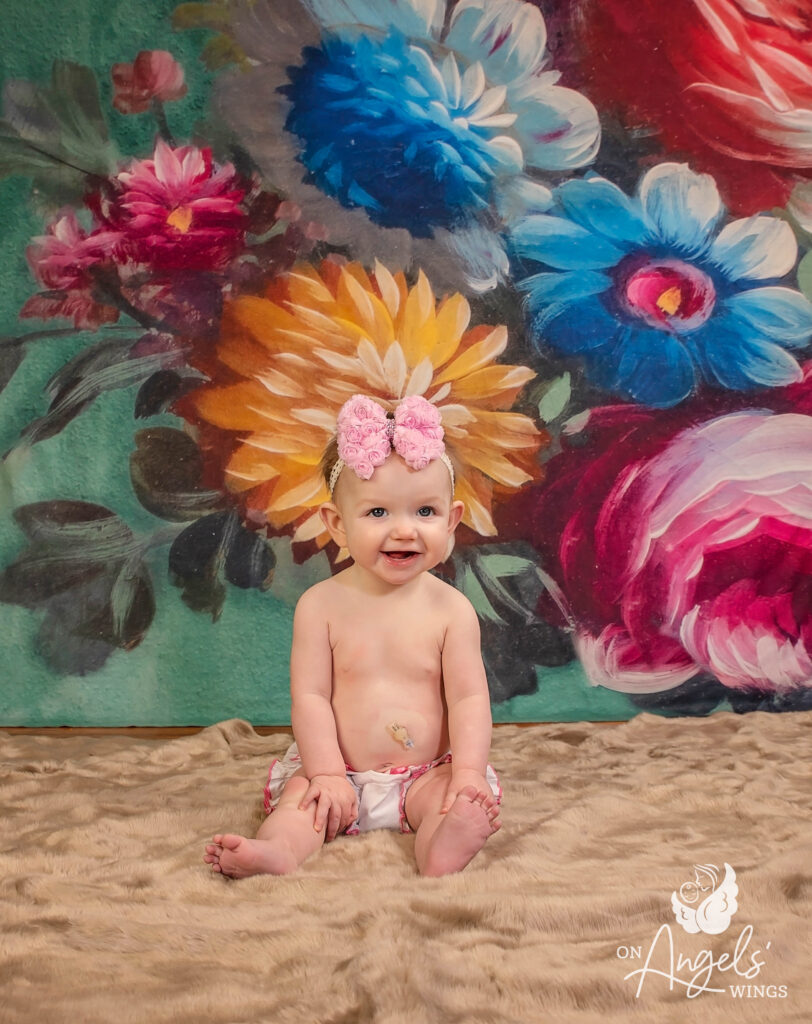
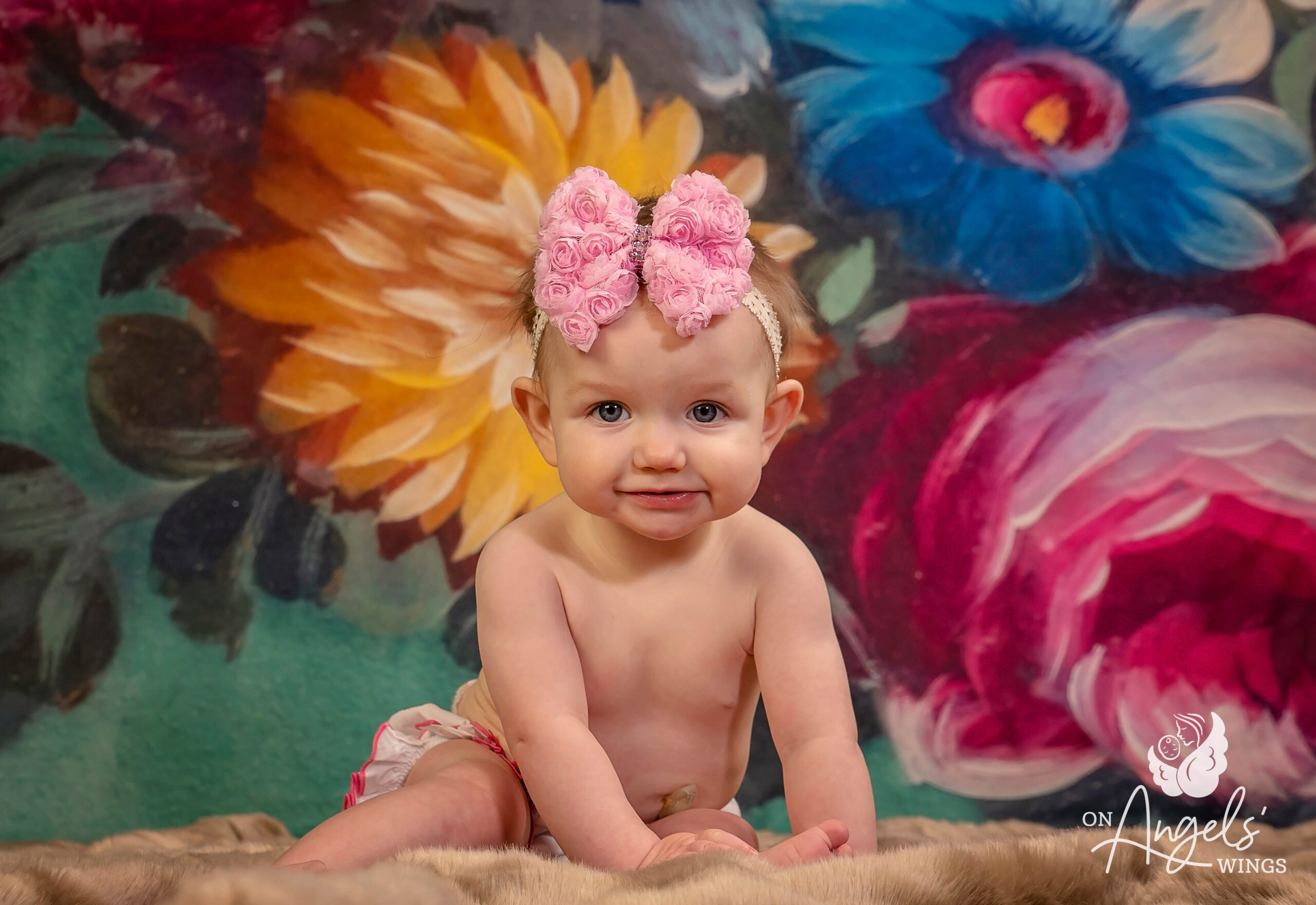
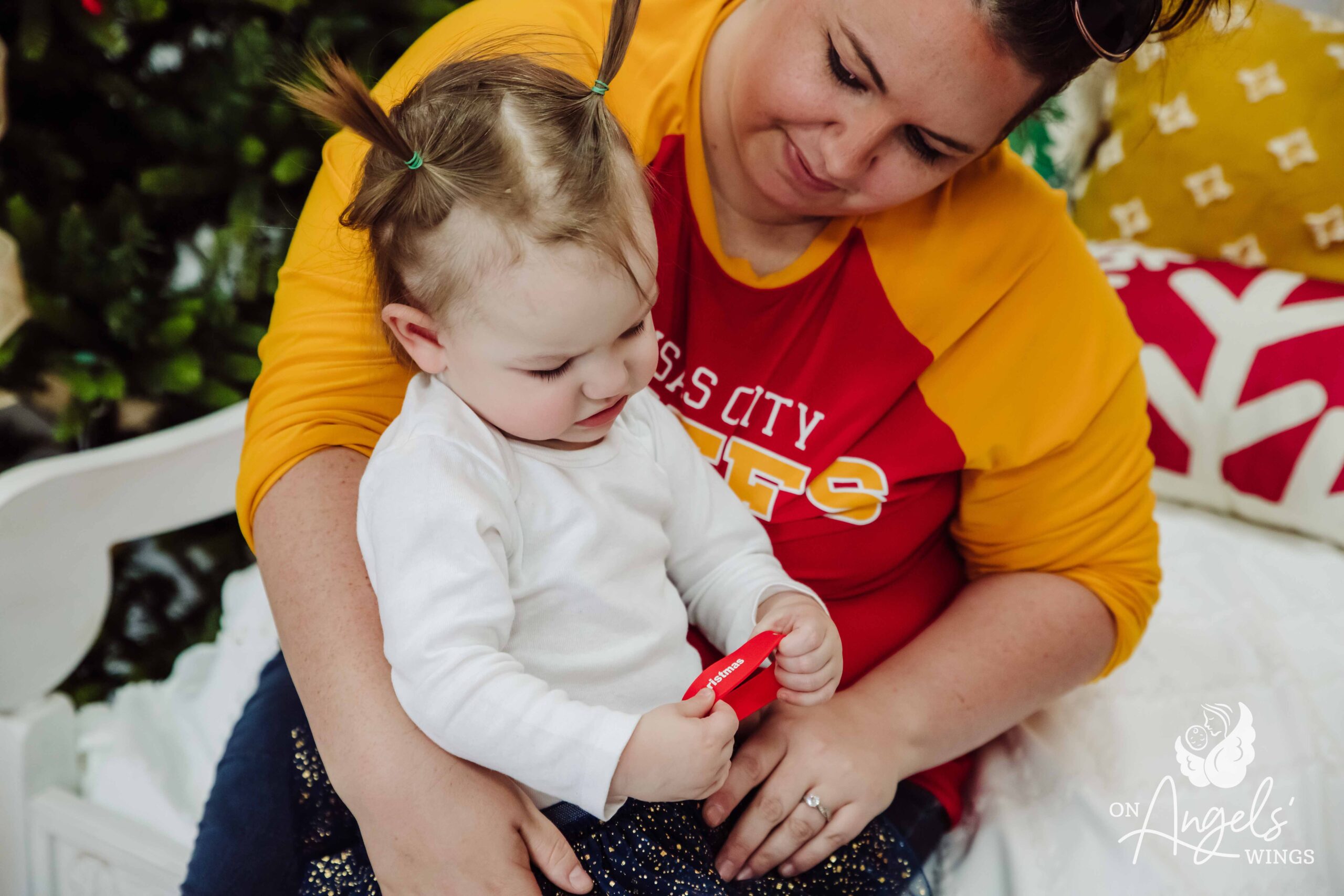
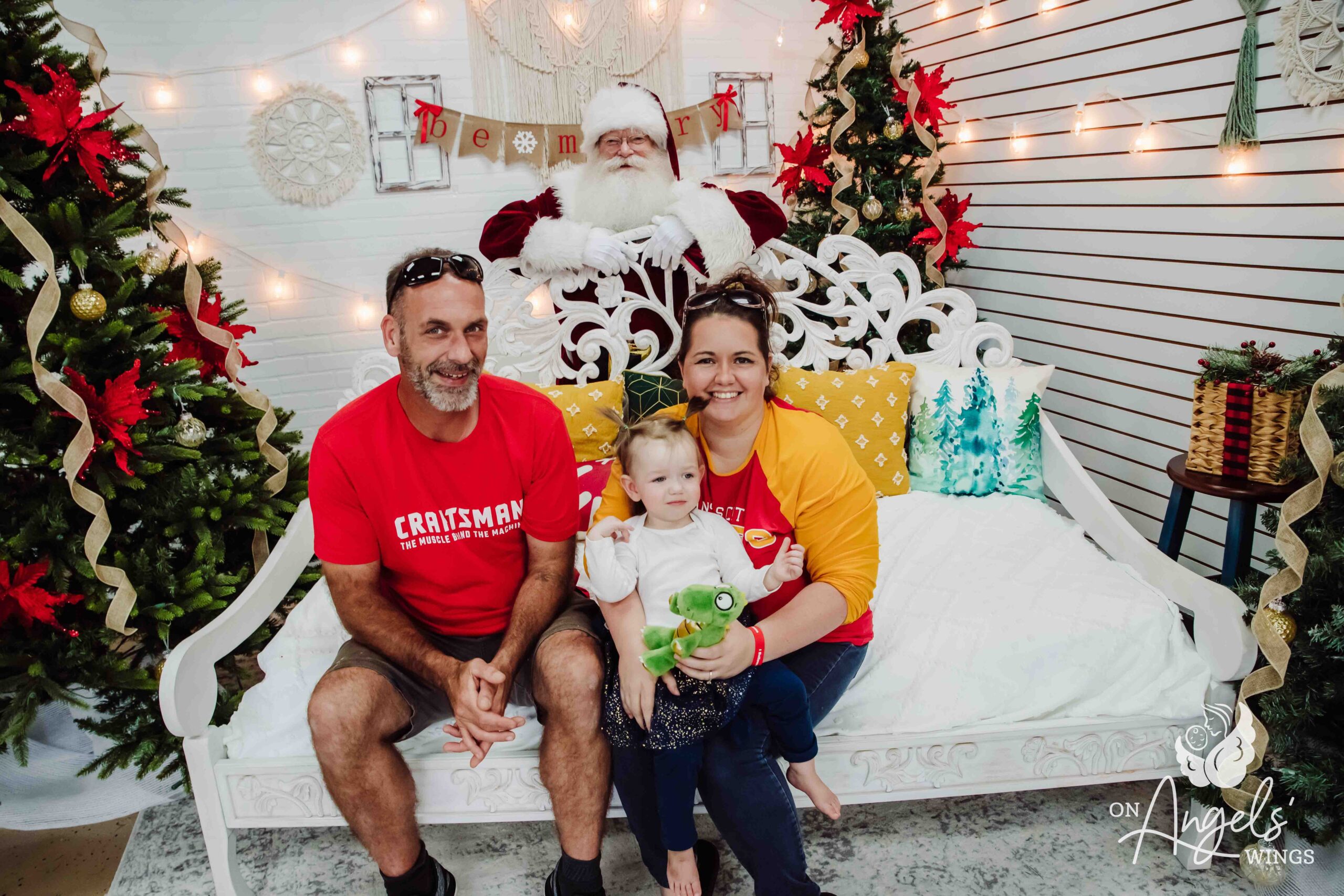
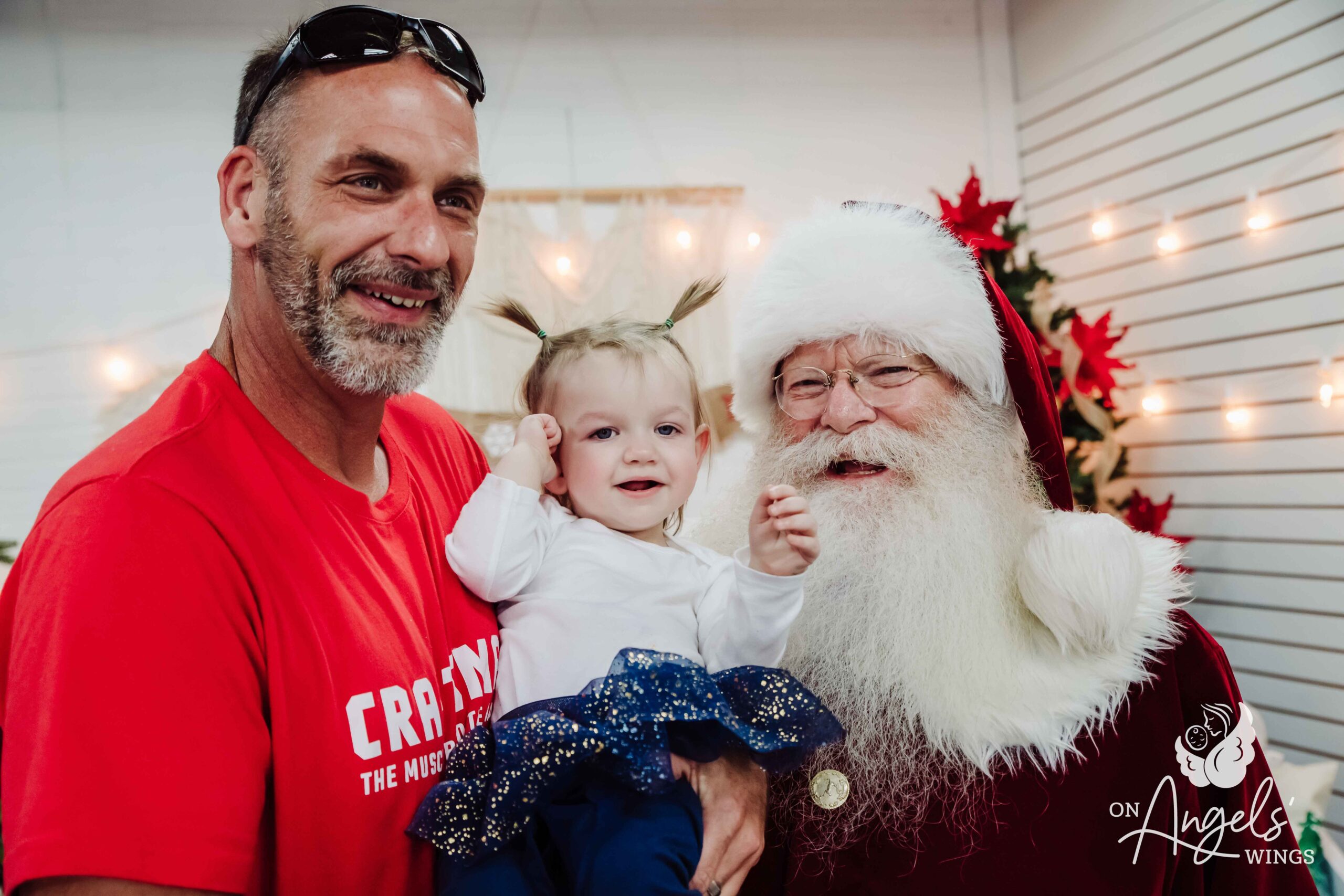
Kinsley was one year old when we finally got her diagnosis. We had traveled to Kansas City, to Children’s Mercy, because doctors in Springfield couldn’t give us answers. They ran every test they could—looking for gene mutations, anything that might explain what was going on. Eventually, they did whole exome sequencing, hoping it would finally give us clarity.
I remember the day the geneticist called me. My heart was racing before I even answered the phone. Part of me wanted answers so badly, but another part of me was terrified of what those answers might be.
And then I heard the words I never expected: Kinsley was the only one in the world with her specific gene mutation.
Not only that—but her mutation was located on a hotspot in her DNA where no one had ever been documented before. She was the first.
There were no case studies. No comparisons. No roadmap for what her future would look like. And that was the scariest part.
As a mom, you want something—anything—to hold onto. You want statistics, outcomes, stories of other children who have walked the same path. But we didn’t have that. We were stepping into the unknown completely.
At the time, it felt overwhelming, isolating, and terrifying. But looking back now, I see it differently. Kinsley wasn’t just a diagnosis—she was paving the way.
Doctors explained that CDK19 is a neurodevelopmental gene mutation, meaning it affects the brain and nervous system. They told me that eventually it would likely lead to grand mal seizures. They painted a picture of a future full of limitations—that she might never walk, never run, and never have the independence other children enjoy.
But Kinsley has never once let a diagnosis define her.
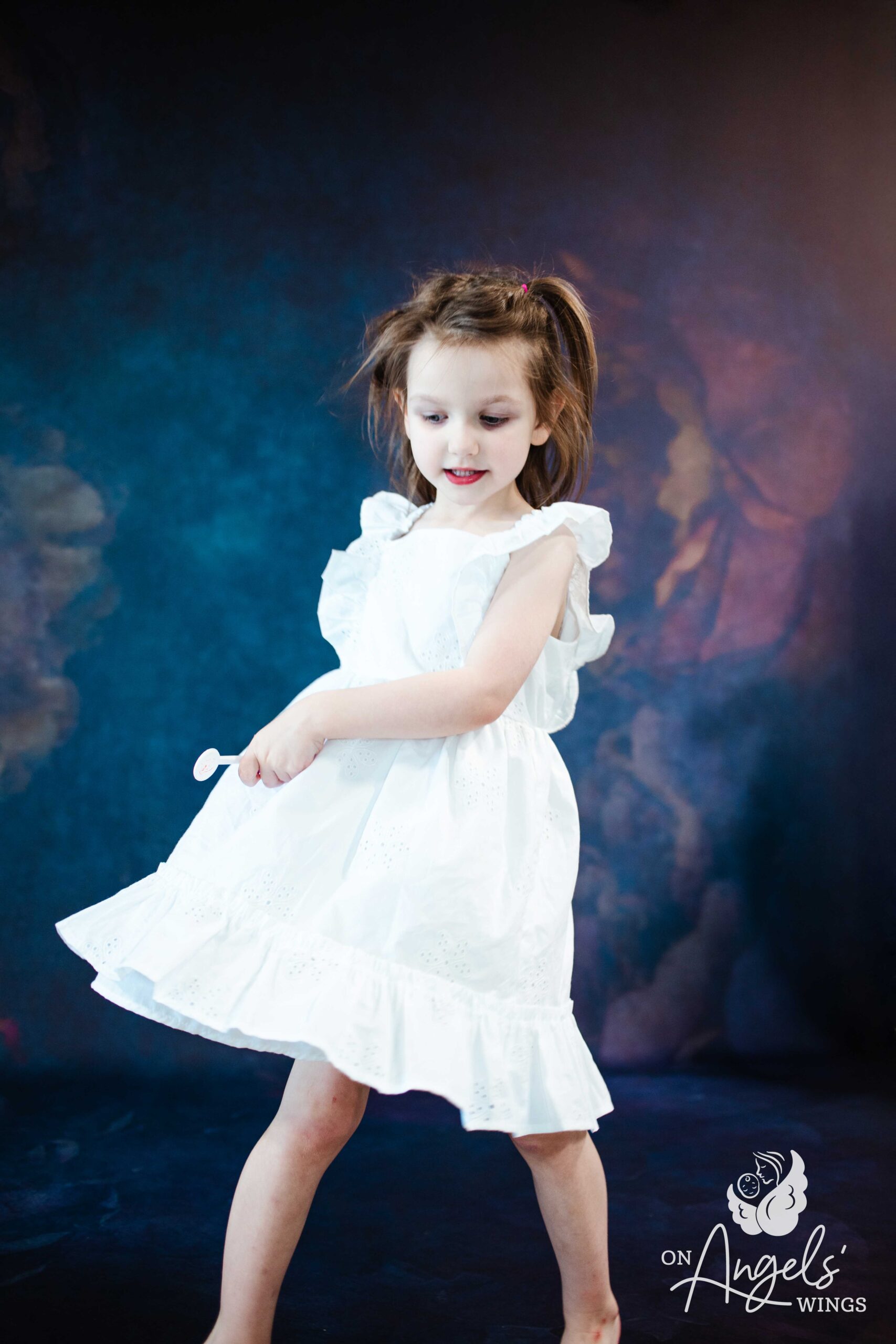
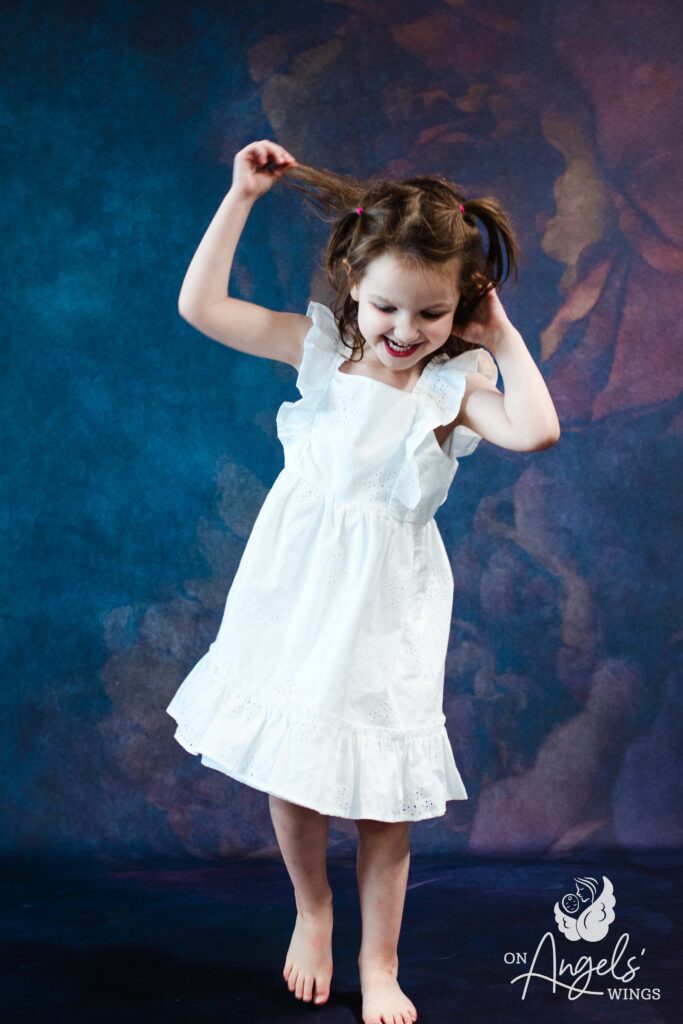
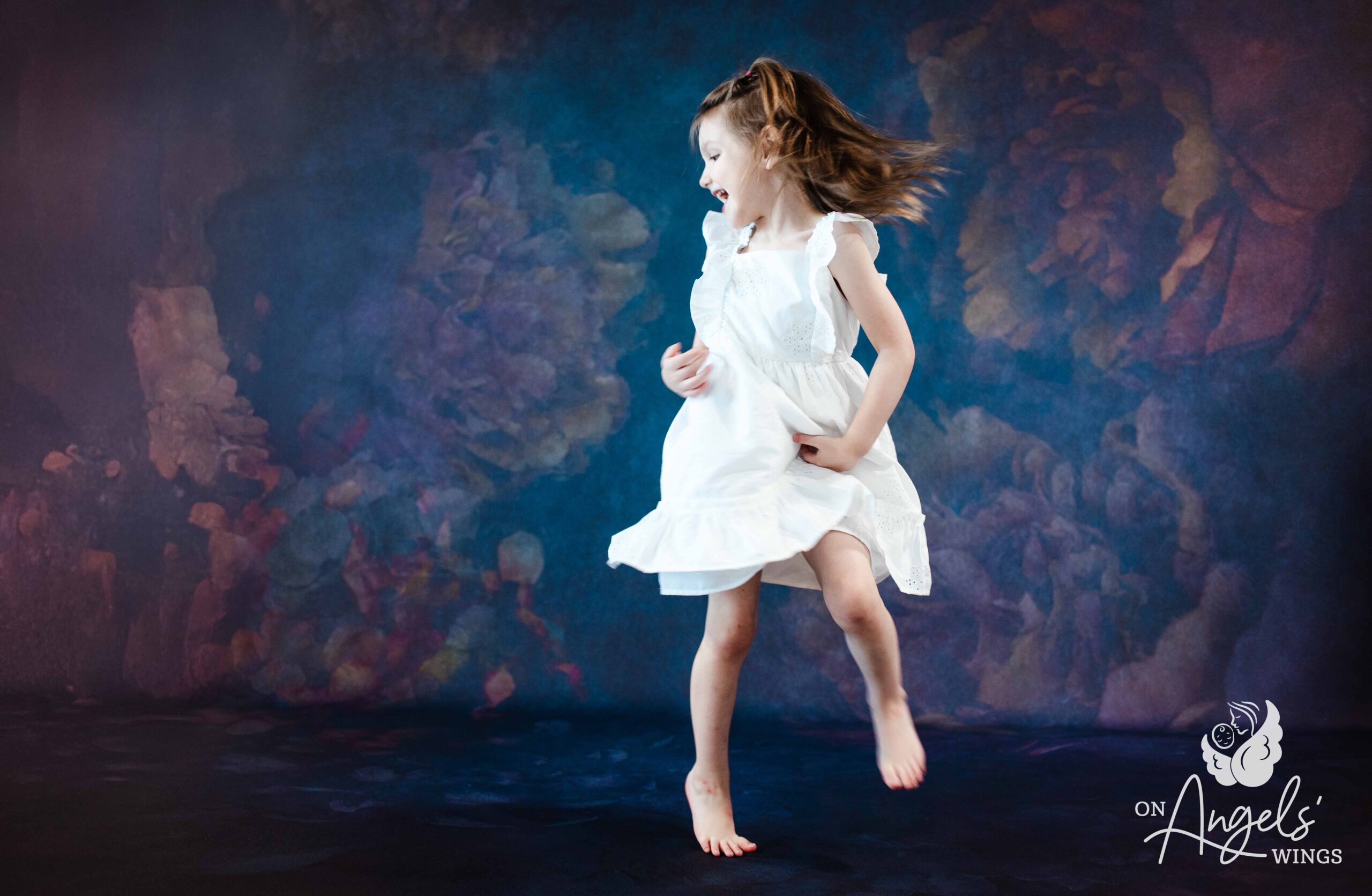
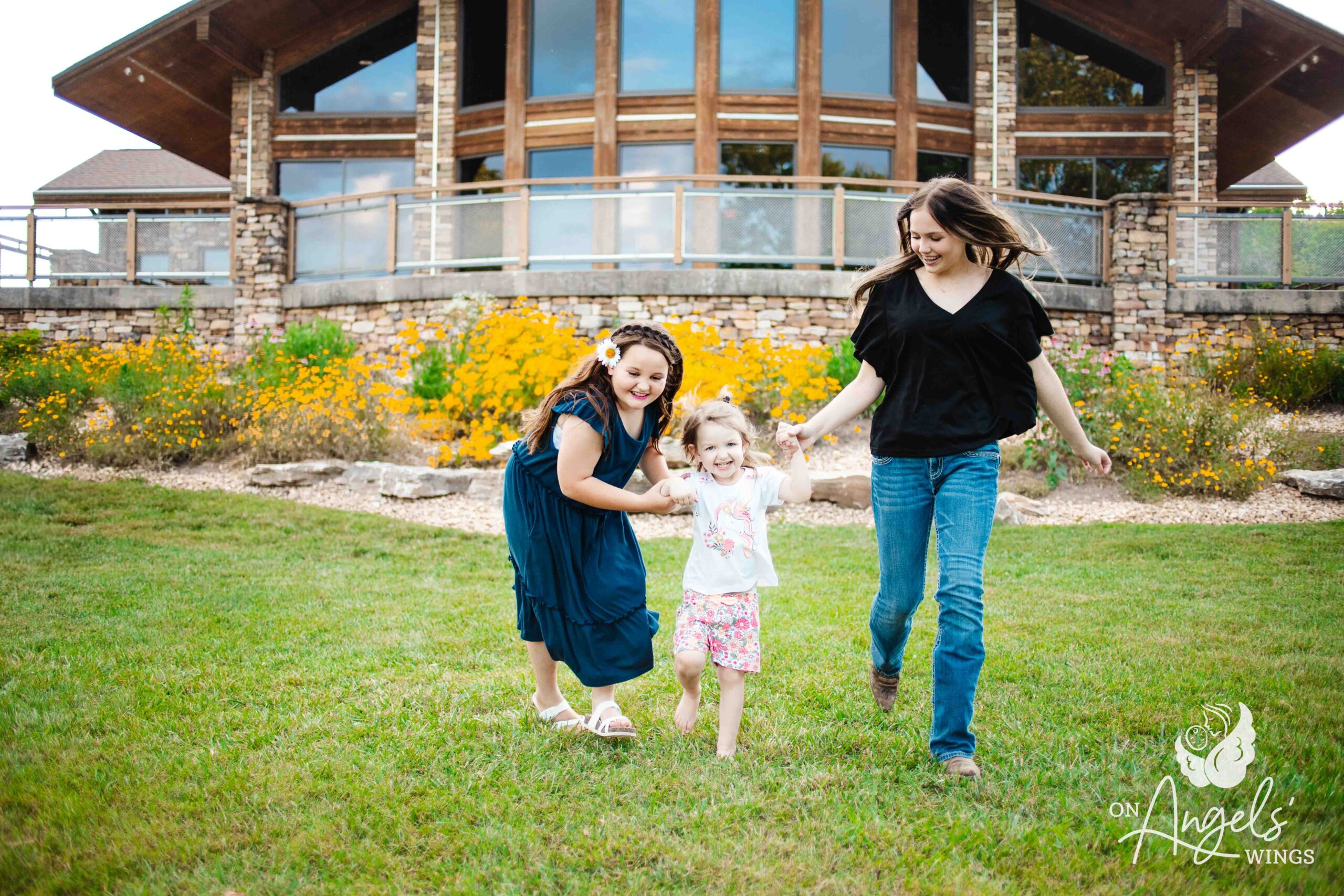
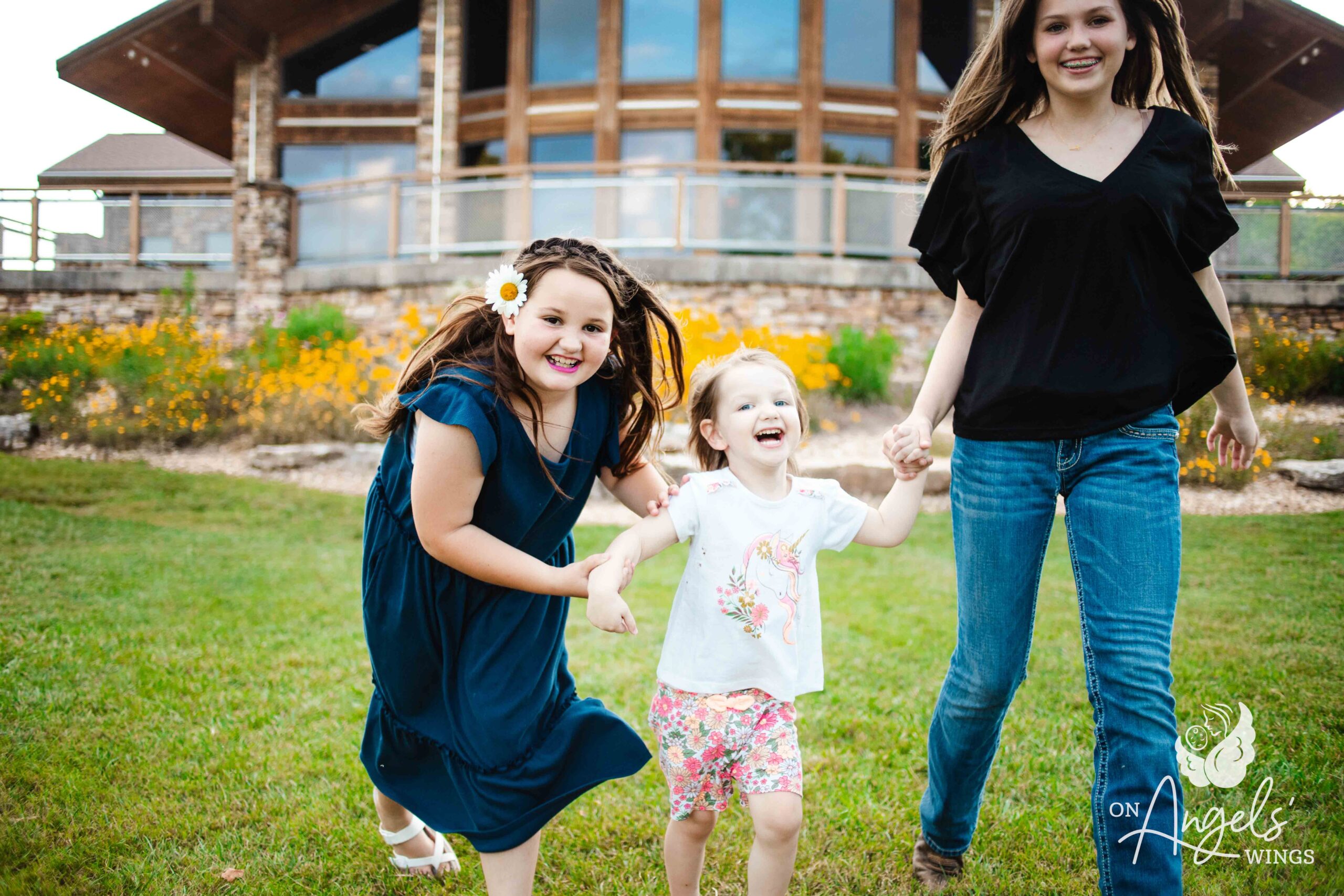
Not only does she walk—she runs, she plays, she laughs, and she chases after life with a spirit that refuses to be contained. Every milestone she’s hit has been a reminder that predictions aren’t promises, and that strength can’t always be measured on a medical chart.
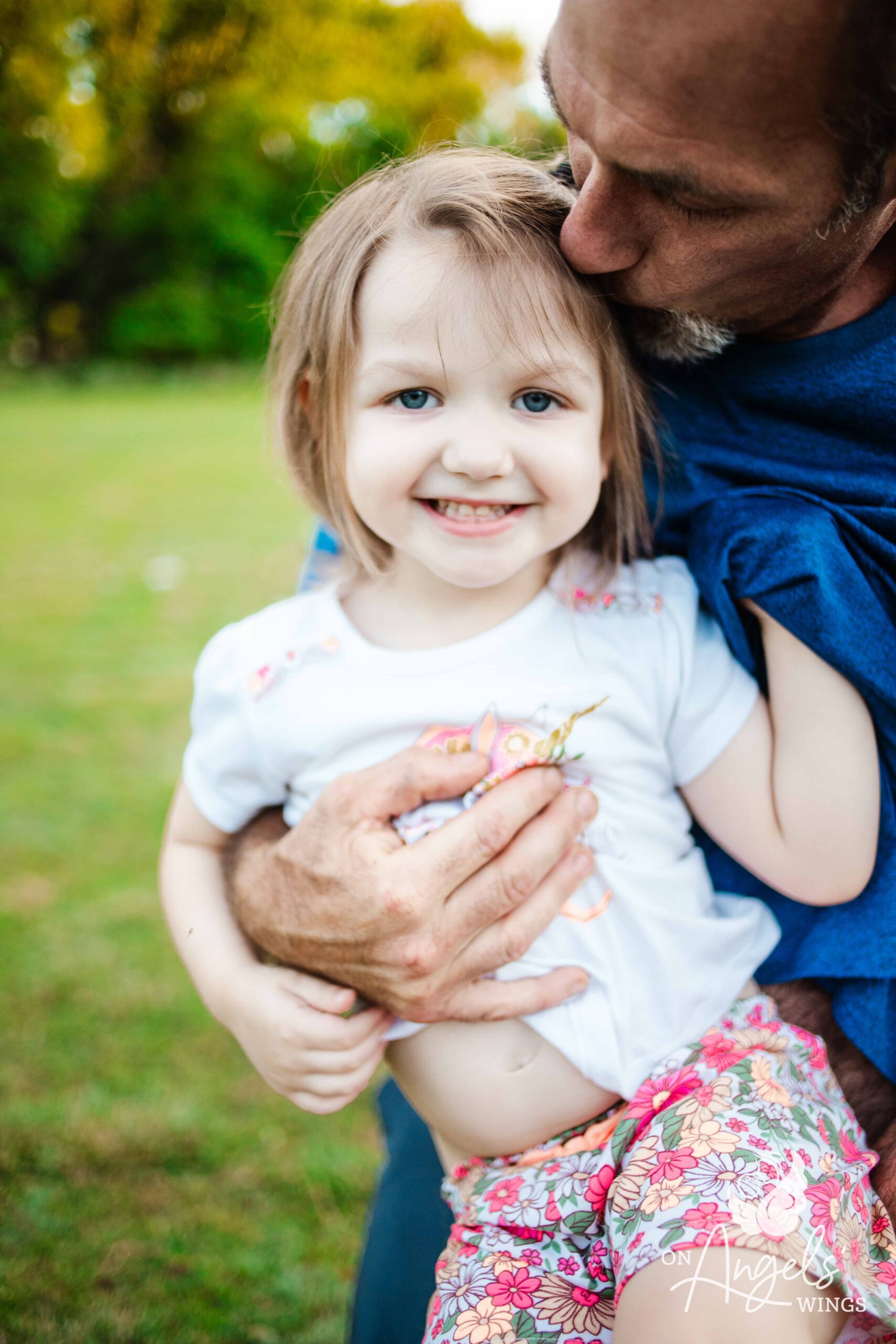
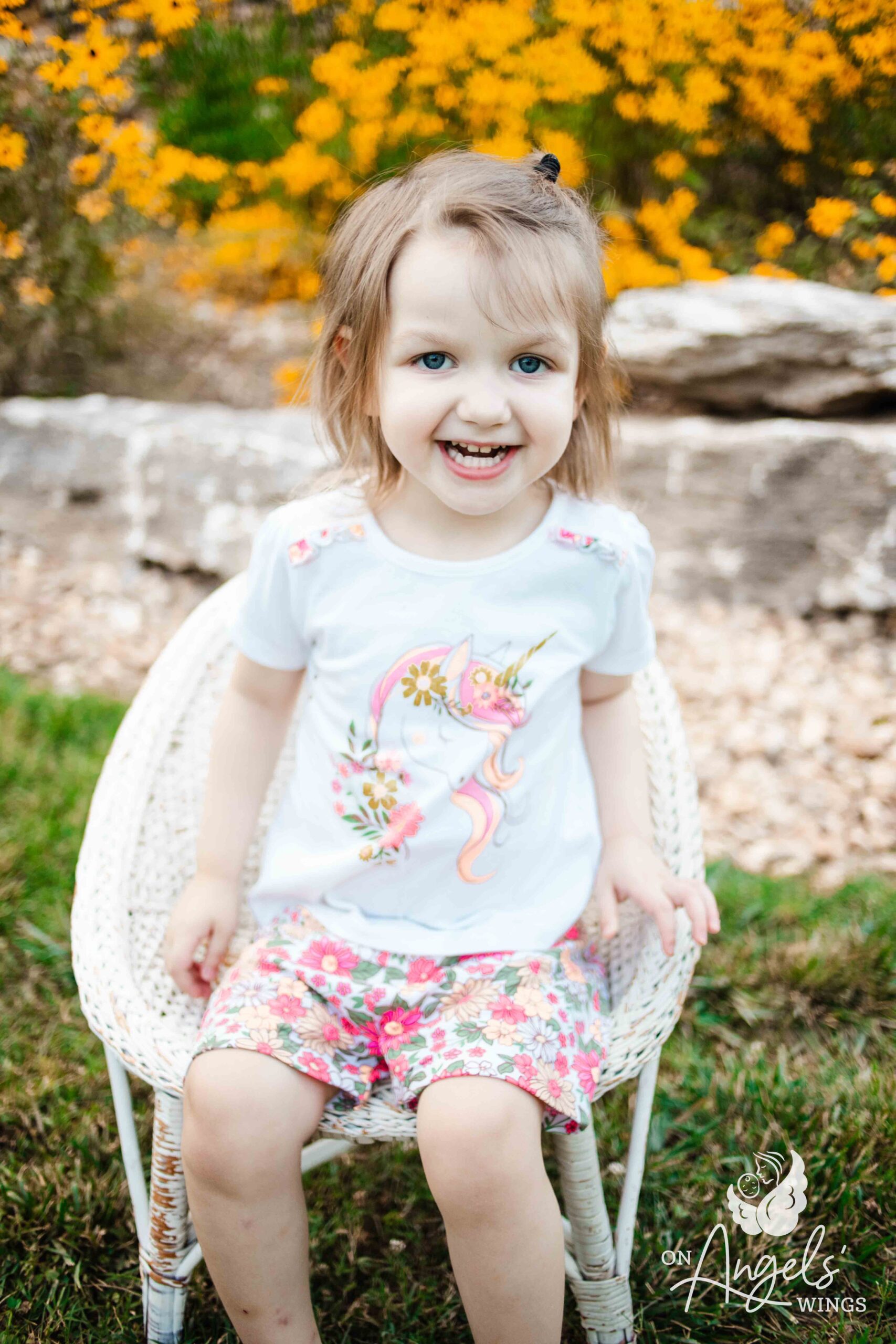
At the same time, her diagnosis has impacted her in very real ways. She used to say a lot of words, and now she only says one. She wants to talk so badly—you can see it. She tries, but she just can’t put the words together.
That’s one of the hardest parts for me.
Another challenge has been that I’m not able to work. Between her disabilities, her appointments, and feeding her through a tube, it’s impossible to put her in daycare. That has been one of the biggest things I’ve had to navigate.
Our days are built around routine because that’s what helps Kinsley thrive. Mornings start early, getting everyone up and ready and taking the kids to school. Once the house quiets down, it’s our time together.
Kinsley goes to therapy three times a week, and those sessions are such an important part of her growth. After that, we usually head to the park—one of her favorite places. She loves being outside, playing, and just getting to be a kid. She loves riding her bike, blowing bubbles, and being outside as much as she can. Running is one of her favorite things too—especially when she’s feeling strong. But with her hypotonia, there are days when her little body just gives out and she falls. And even in those moments, she keeps trying.
Kinsley is doing better in many ways now. Some days she eats, some days she doesn’t. Some nights she sleeps, and other nights she’s up for two or three nights in a row, which isn’t uncommon for children on the autism spectrum. We take each day as it comes.
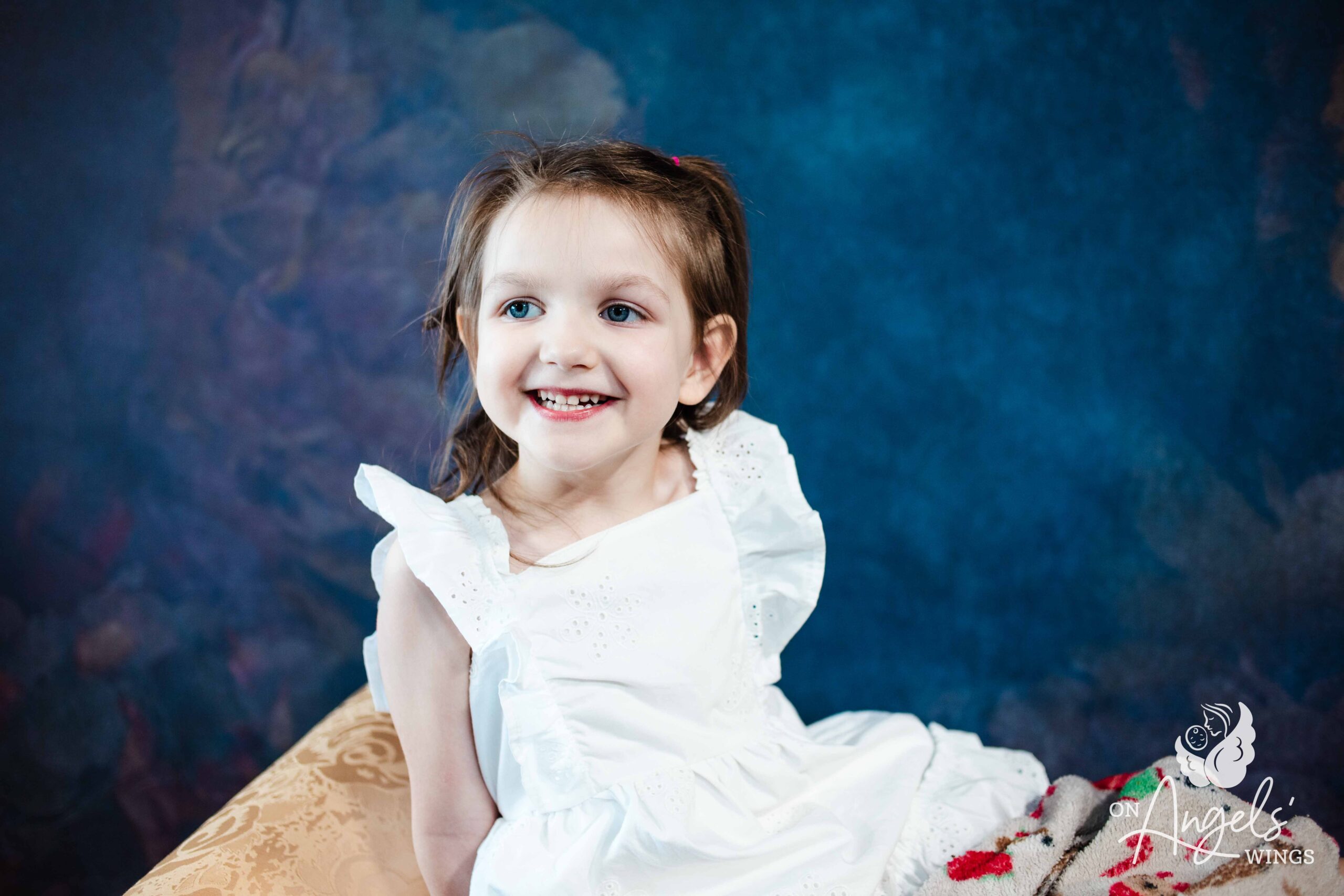
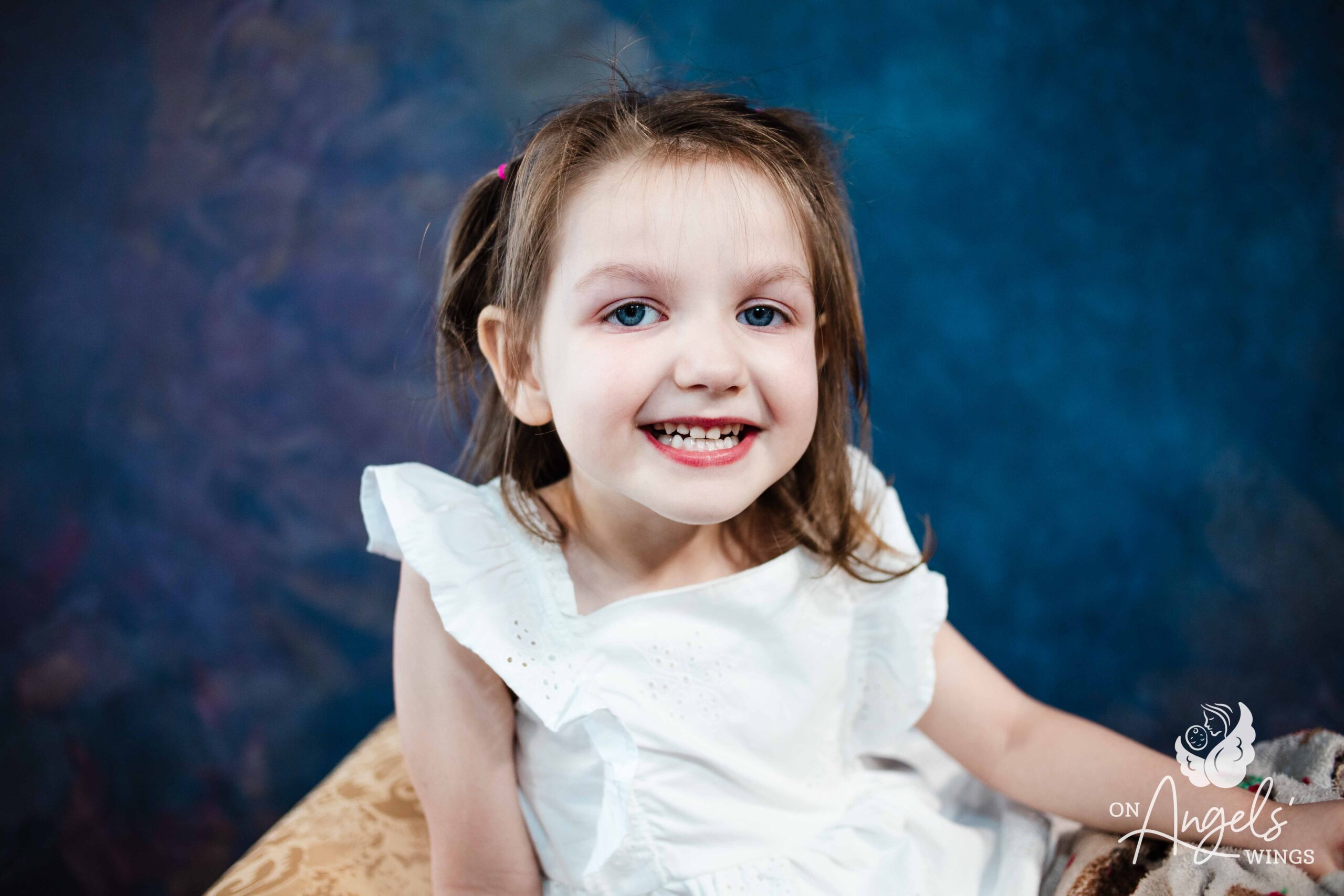
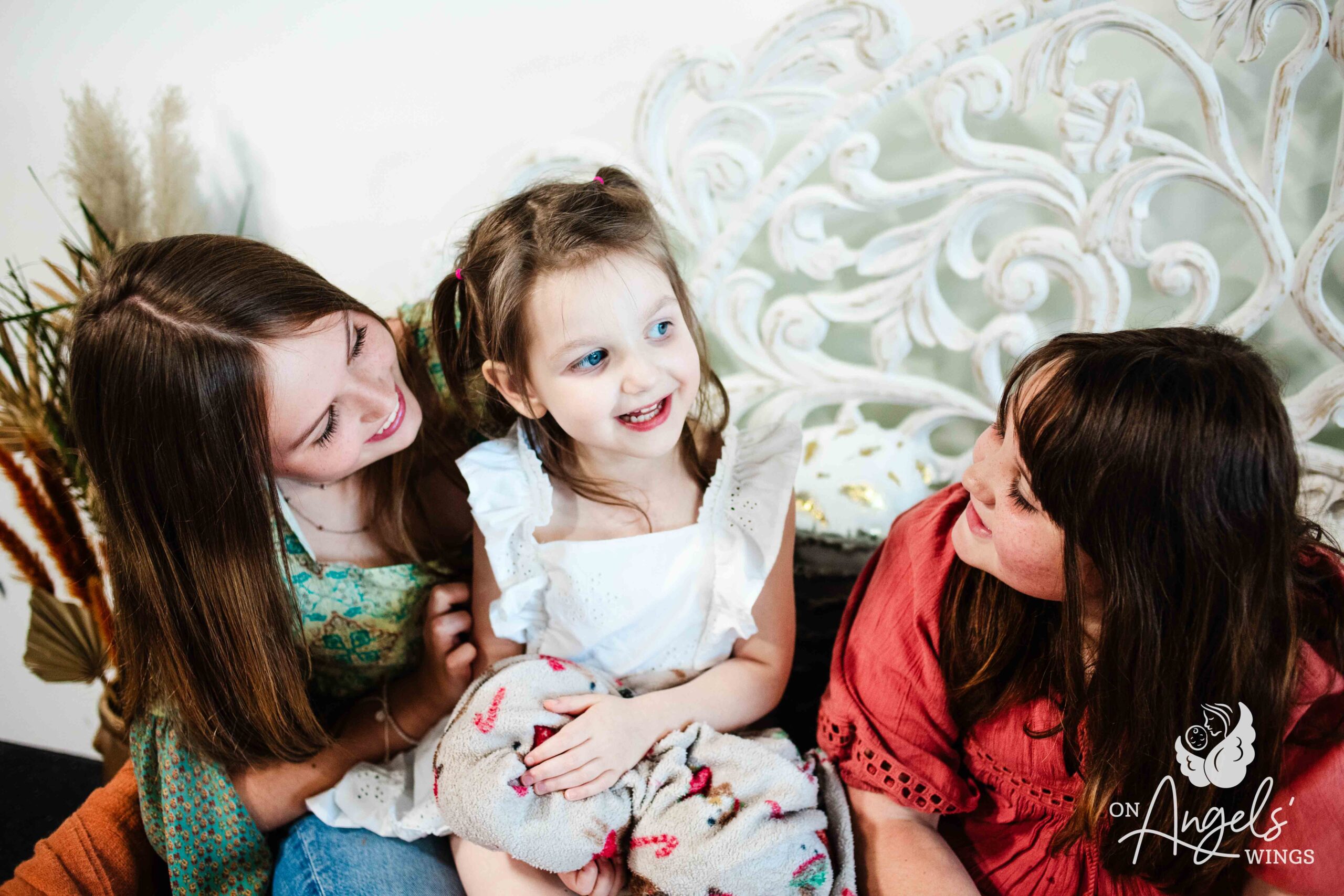
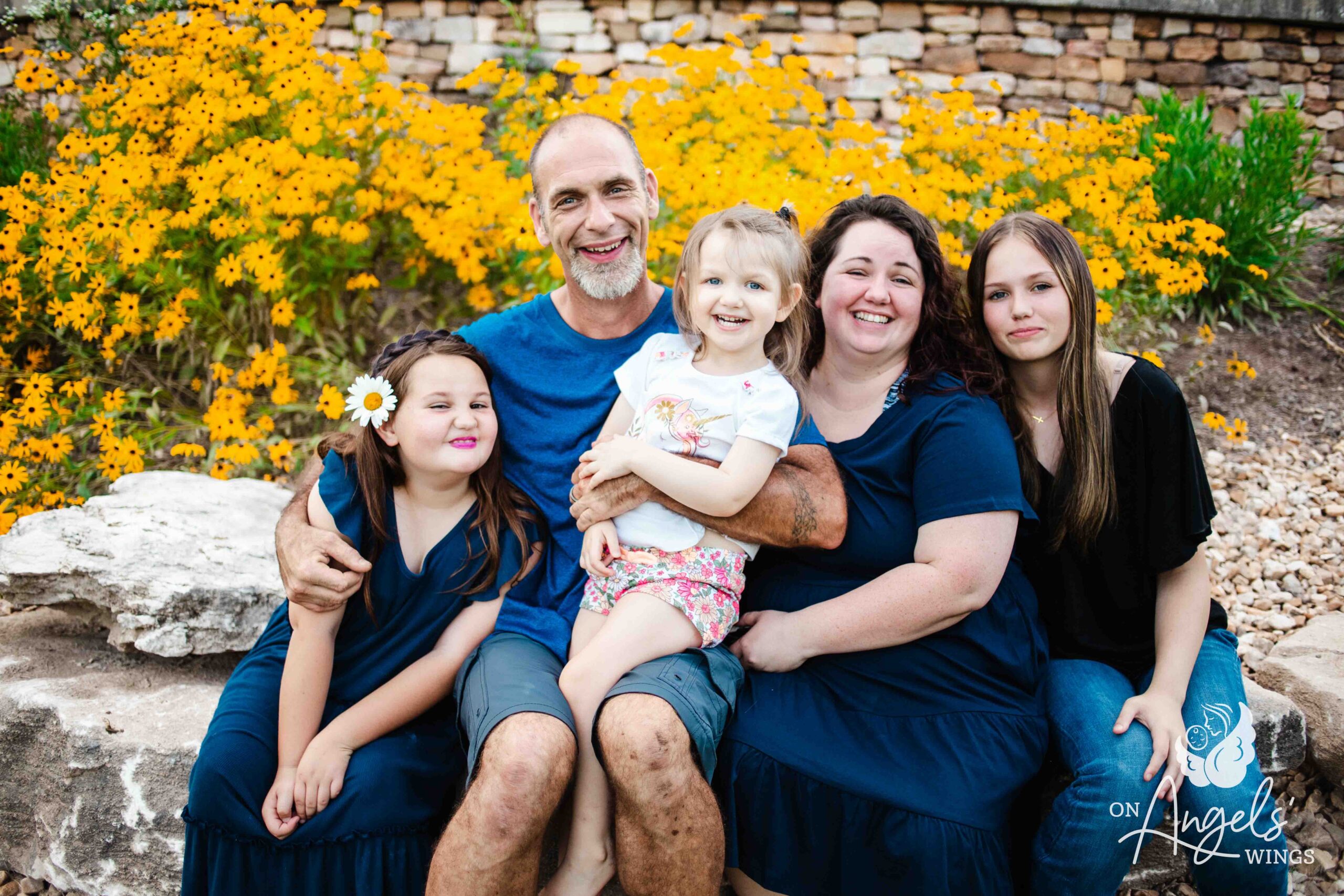
Kinsley’s personality is one of my favorite things about her. She loves picking on everyone in the house, always keeping us on our toes and making sure there’s never a dull moment. She has this playful, mischievous spirit that brings so much life into our home. She loves her cartoons, her routines, and most of all, she loves her sisters. The bond they share is something so special, and it’s one of the most beautiful things to watch.
My biggest hope for her is simple—that she can talk. That’s what she wants the most, and I want that for her too.
I found On Angels’ Wings when I was searching online for something to help me mentally process everything that comes with her diagnosis. That’s when I came across them. The pictures OAW provides are something I look forward to every year. Most of the time, as special needs parents, we can feel lost and hopeless with all the battles we face, and this is a little light for us.