By Mariah Kochell
Mommy to Stevie Judd
Bronchopulmonary Dysplasia (BPD – Chronic Lung Disease)
Born July 2024
We found out on Valentine’s Day of 2024 that we were pregnant. We were so excited and couldn’t have imagined the journey we were about to start. Things started out normally for us, but after about 20 weeks into the pregnancy, we began facing some issues—the biggest one being Intrauterine growth restriction (IUGR). Our daughter was measuring in the 3rd percentile for gestational size and began having problems with her blood pressure.
At that point, we were considered a high-risk pregnancy and were encouraged to admit to the hospital at 24 weeks pregnant. This was incredibly scary and put us in a difficult position when it came to deciding how to proceed. We began steroids to help with fetal development in anticipation of an early delivery and hoped we would make it to at least 28 weeks before delivering. Thankfully, we had a wonderful team of doctors who closely monitored our pregnancy multiple times a week. Our daughter’s blood pressure began improving, I was released from the hospital, and we were hopeful we could make it a few more weeks into the pregnancy.
Then things took a turn for the worse.
The morning of July 4th, I began having severe abdominal pain. After arriving at the hospital and undergoing evaluation, I was diagnosed with preeclampsia and HELLP syndrome. I was in acute liver and kidney failure, and we had no option but to deliver our daughter at 25 weeks gestation. I underwent an emergency C-section. I was stabilized, and Stevie was born weighing just 1 pound, 6 ounces.
Because we had been anticipating a premature delivery, we had already been informed of the many risks and possible outcomes Stevie might face. Because she was born so early and was so underdeveloped even for a 25-weeker, we were simply hoping she would survive. We didn’t know exactly what problems we would be facing with her health, but we considered ourselves lucky each day we got to spend with her.
Stevie was diagnosed with Bronchopulmonary Dysplasia (BPD – Chronic Lung Disease) almost immediately after she was born. She needed a high level of oxygen support and was intubated at birth. Her doctors explained that she needed that oxygen support to survive, but that the same support could also damage her lungs. Stevie was born with sick, underdeveloped lungs, so there was not a lot of room for additional damage.
Her BPD diagnosis felt incredibly overwhelming. Every day we watched her struggle, even with the level of support she was receiving. Her doctors explained that she would continue to struggle until her lungs grew and strengthened, and that simply took time. We were fearful that she would tire out from working so hard to breathe and that she wouldn’t be able to overcome pneumonia and other illnesses she was so susceptible to.
We were introduced to On Angels’ Wings during one of the darkest moments of our journey. About a month after Stevie was born, her condition suddenly worsened, and her doctors determined she needed to be transferred to a higher level of care. She had become so sick, so quickly, that she was not expected to survive the transport.
There aren’t words to describe the devastation we felt.
The wonderful nurses caring for us began making mementos. They made molds of her hands and feet, recorded her heartbeat and placed it inside a stuffed bear, and created a tiny bracelet with her name on it. One of those nurses, Lisa, volunteered with On Angels’ Wings. She took photos documenting what we believed were our final moments with Stevie.
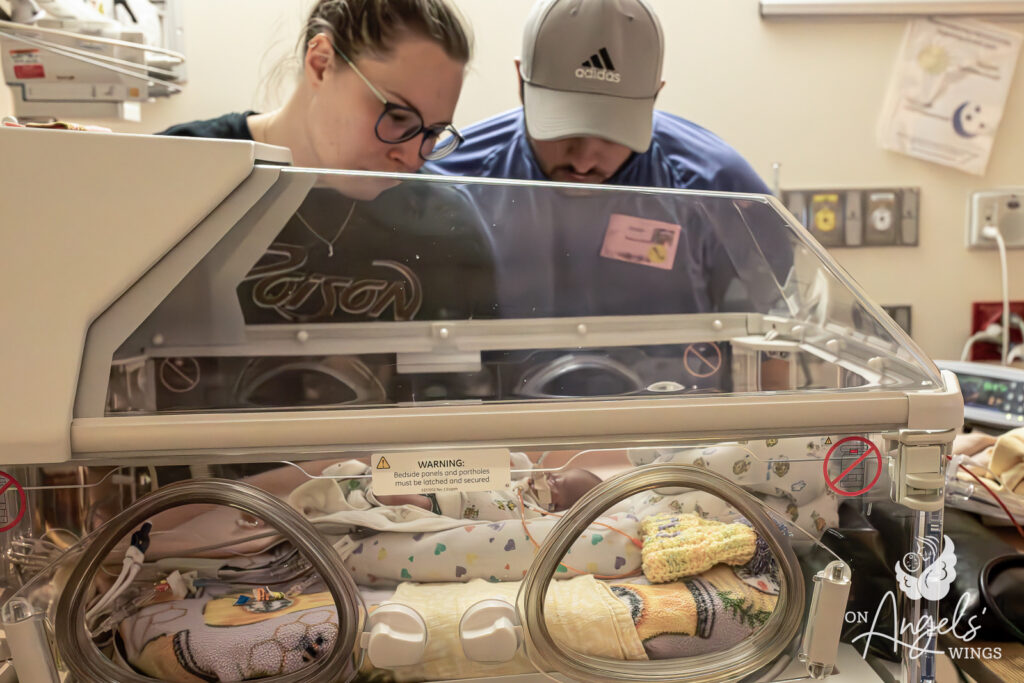
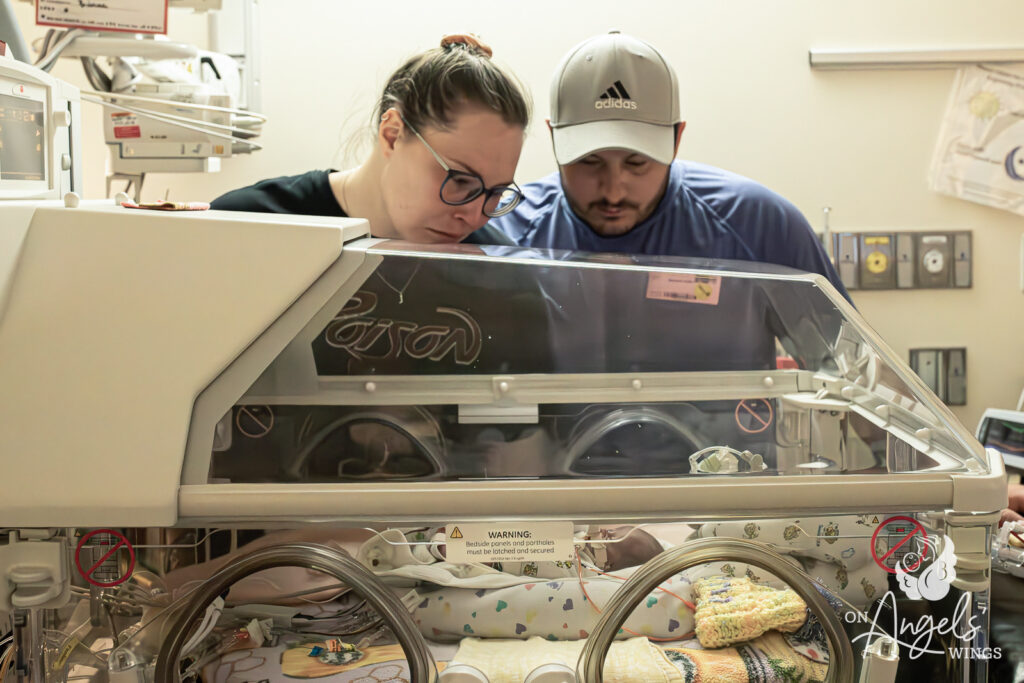
At the time, it was devastating. After she finished taking photos, Lisa hugged me and said, “I’ve done this for a long time, and I’ve seen many miracles. I’ve seen babies as sick as Stevie fight and get better. Don’t give up hope.”
We will forever be grateful for the love, support, and comfort they provided us that night. Hope goes a long way when your child is that sick, and On Angels’ Wings gave us hope when we needed it most.
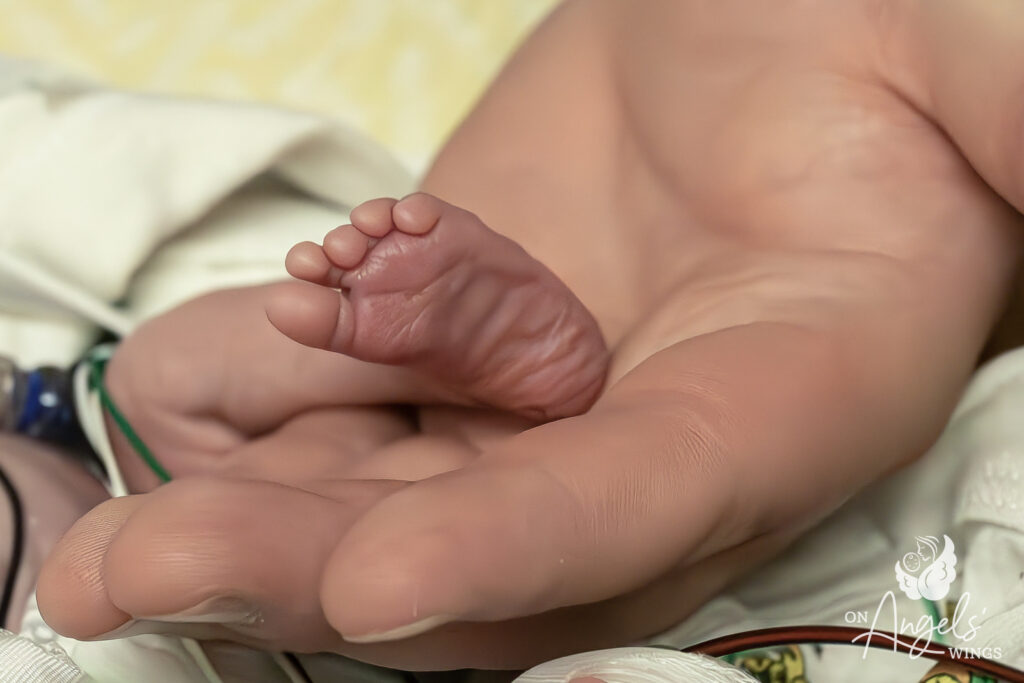
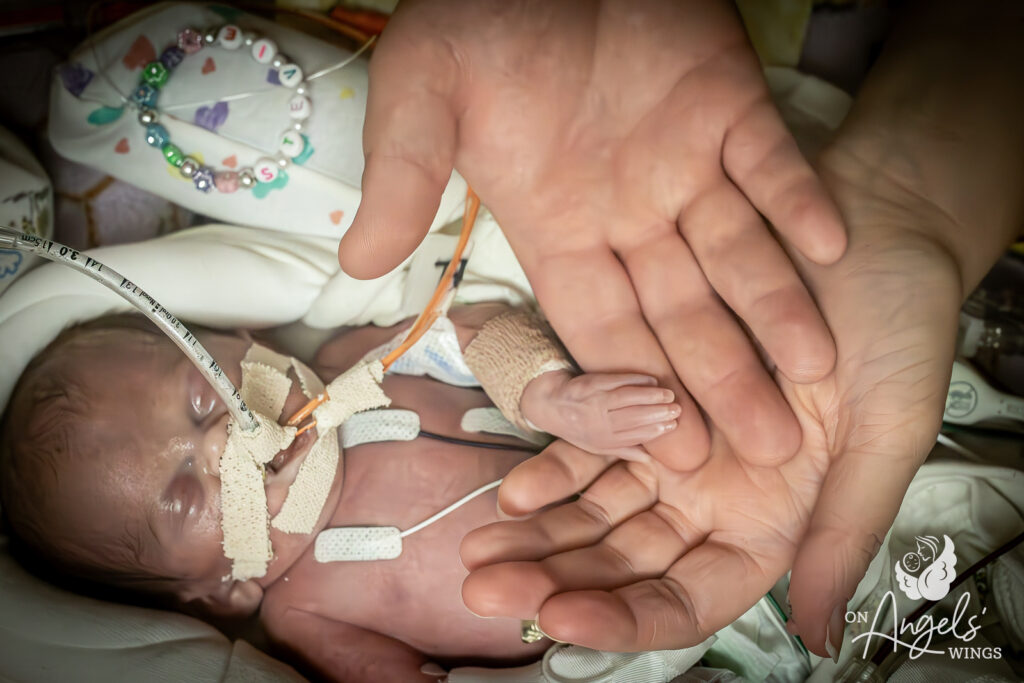
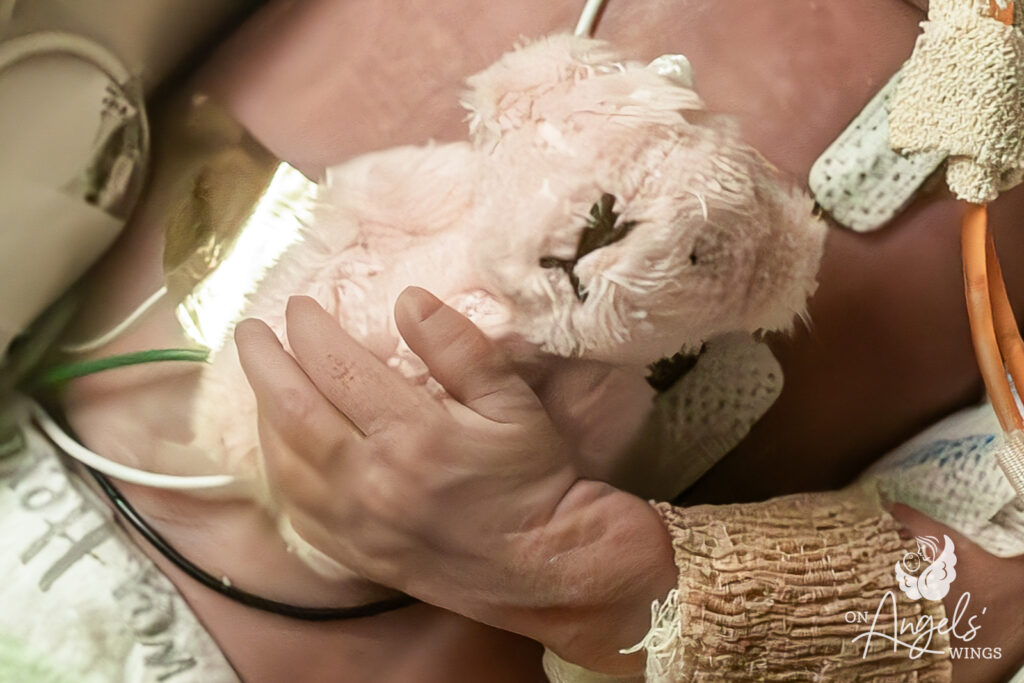
In total, we were hospitalized for 202 days.
In the NICU, doctors often said, “It’s a marathon, not a sprint.” In those first few months, hearing those words was brutal. Each day felt terrifying. We spent more than 12 hours a day at the hospital, afraid to leave in case the worst happened while we were gone. We couldn’t hold Stevie because she was so sick. Some days, the most we could do was read to her while placing a hand inside her incubator.
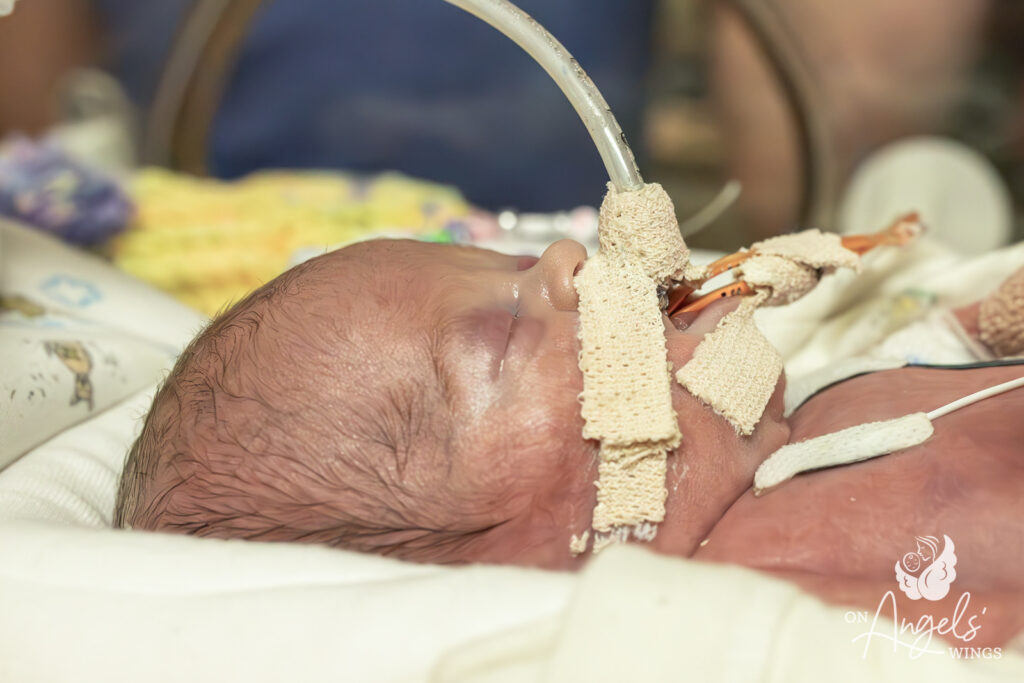
We rarely left her side and lived in a constant state of fight-or-flight for several months.
After being transferred to another hospital, we were nearly four hours from home. For about six months, we lived at the Ronald McDonald House. I was unable to work, and we were separated from friends and family during a time when we needed them most. Being hospitalized for so long was isolating. We suffered emotionally and financially and often felt helpless.
Even through the hardest days, we had support. Our family and friends did what they could to help us, and we are eternally grateful for them. Stevie’s primary nurses became like family. They supported me emotionally on long days and cared for me just as much as they cared for her. We leaned on one another and on the incredible caregivers who surrounded us.
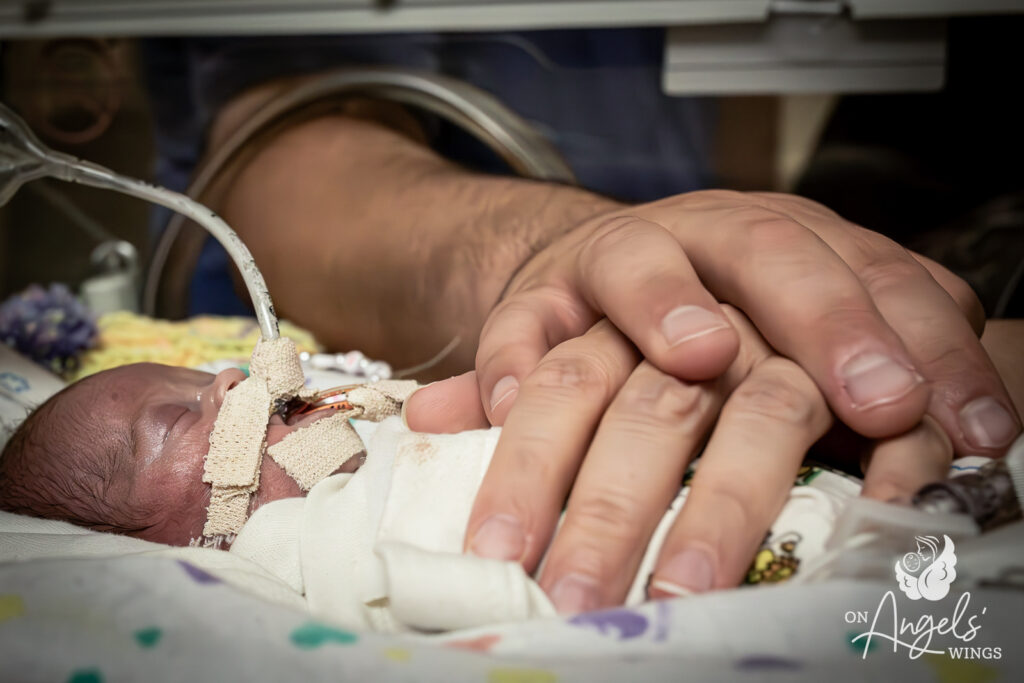
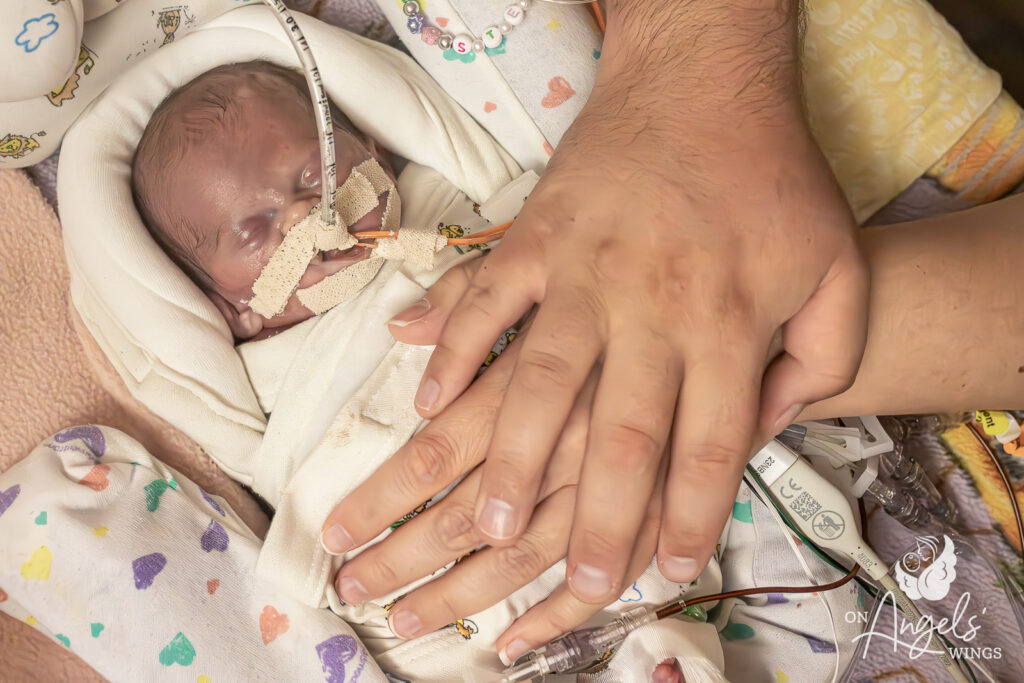
As Stevie slowly improved, we began to understand what everyone meant when they said it was a marathon and not a sprint. Looking back, I’m incredibly grateful for the doctors, nurses, and respiratory therapists who cared for Stevie. Knowing she was loved and well cared for gave us the hope and strength we needed to survive those difficult months.
We are very fortunate that Stevie has overcome so much. At one point, it felt almost certain that she would require a tracheostomy, so it feels like a miracle that she is now breathing completely on her own without oxygen support.
BPD is a chronic disease, which means Stevie remains more susceptible to viruses, infections, and respiratory illnesses. We take extra precautions during cold and flu season, and she regularly takes steroids to help strengthen and protect her lungs. While we do our best to keep her healthy, there is always uncertainty about how her lungs will respond when she inevitably gets sick.
The indirect impact of her diagnosis has also been developmental delay. Because Stevie spent seven months hospitalized, she wasn’t able to experience many of the things other babies do. She couldn’t be fed by mouth, couldn’t be held the same way, and missed out on many early developmental experiences. By the time we were finally discharged, she was significantly behind developmentally.
Stevie eventually required a G-tube because the trauma from prolonged oxygen support and delayed oral development meant she was unable to breastfeed or bottle-feed. She had to learn how to swallow and breathe at the same time—something most babies begin doing at birth. Stevie didn’t start that process until she was six months old, creating additional challenges when it came to providing nutrition.
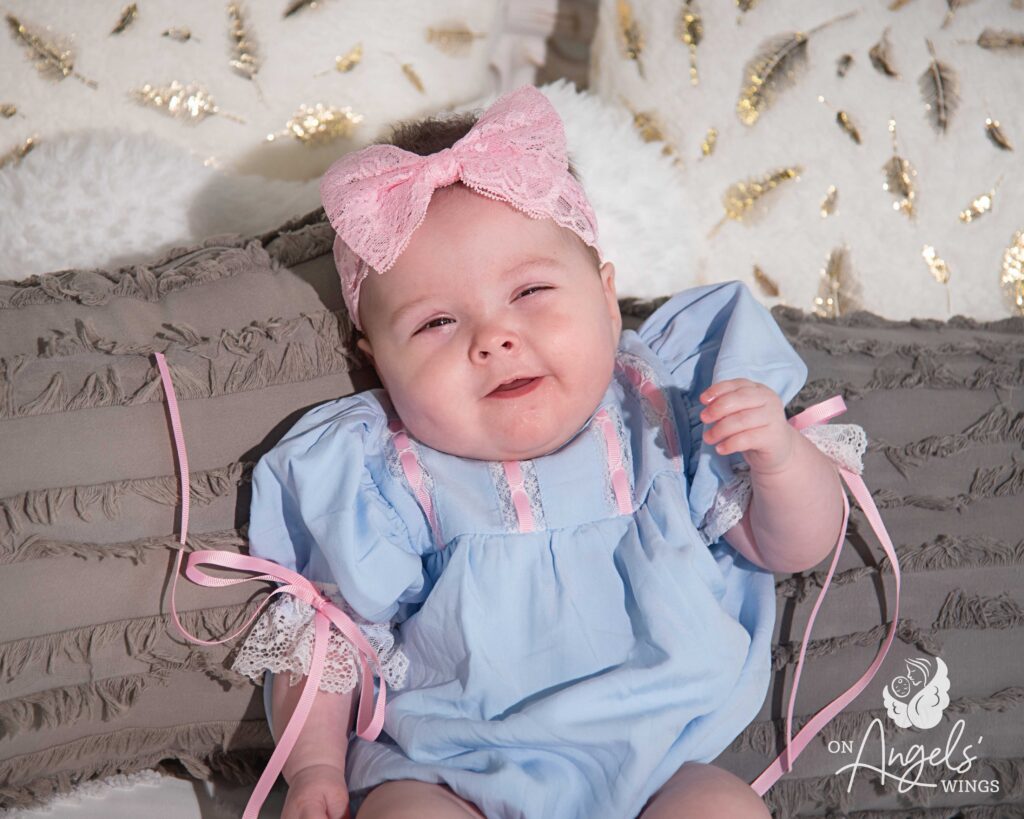
Today, Stevie is nearly two years old, and about eighteen months corrected age. She has worked incredibly hard in therapy to overcome the obstacles that prematurity and BPD created. Life outside the hospital was more challenging than we expected, with multiple doctor appointments and therapy sessions every week.
At this point, Stevie is crawling and close to walking. Physical and occupational therapy have helped her make tremendous progress. Feeding and speech therapy have also been successful. She now drinks through a straw and eats food by mouth. While she still receives some nutrition and fluids through her G-tube, we are hopeful that she can be fully weaned from it in the coming months.
She has grown into a strong, playful, and capable little girl.
One of the greatest lessons we’ve learned through Stevie’s journey is that you never know what someone else is carrying. When Stevie was first born, it was obvious she was sick. Today, BPD is largely an invisible disease. People who meet her now would never know the obstacles she has overcome or the challenges she continues to face.
We’ve learned that the same is true for so many children and adults. Because of that, we try to approach everyone with kindness, understanding, and compassion.
Stevie is quite the character. Her personality is strong, she is silly, and she absolutely loves making people laugh. One of our favorite things about her is how hard she makes people work for a smile. She knows exactly what she likes and is never afraid to say no. She may be small, but she is mighty.
Our hope for the future is that Stevie continues to grow stronger every day. She has already overcome so many obstacles, and it’s clear she is not going to let anything hold her back from life. As parents, we hope we can minimize future challenges related to her diagnosis so she can focus her energy on growing, learning, playing, and simply being a kid.
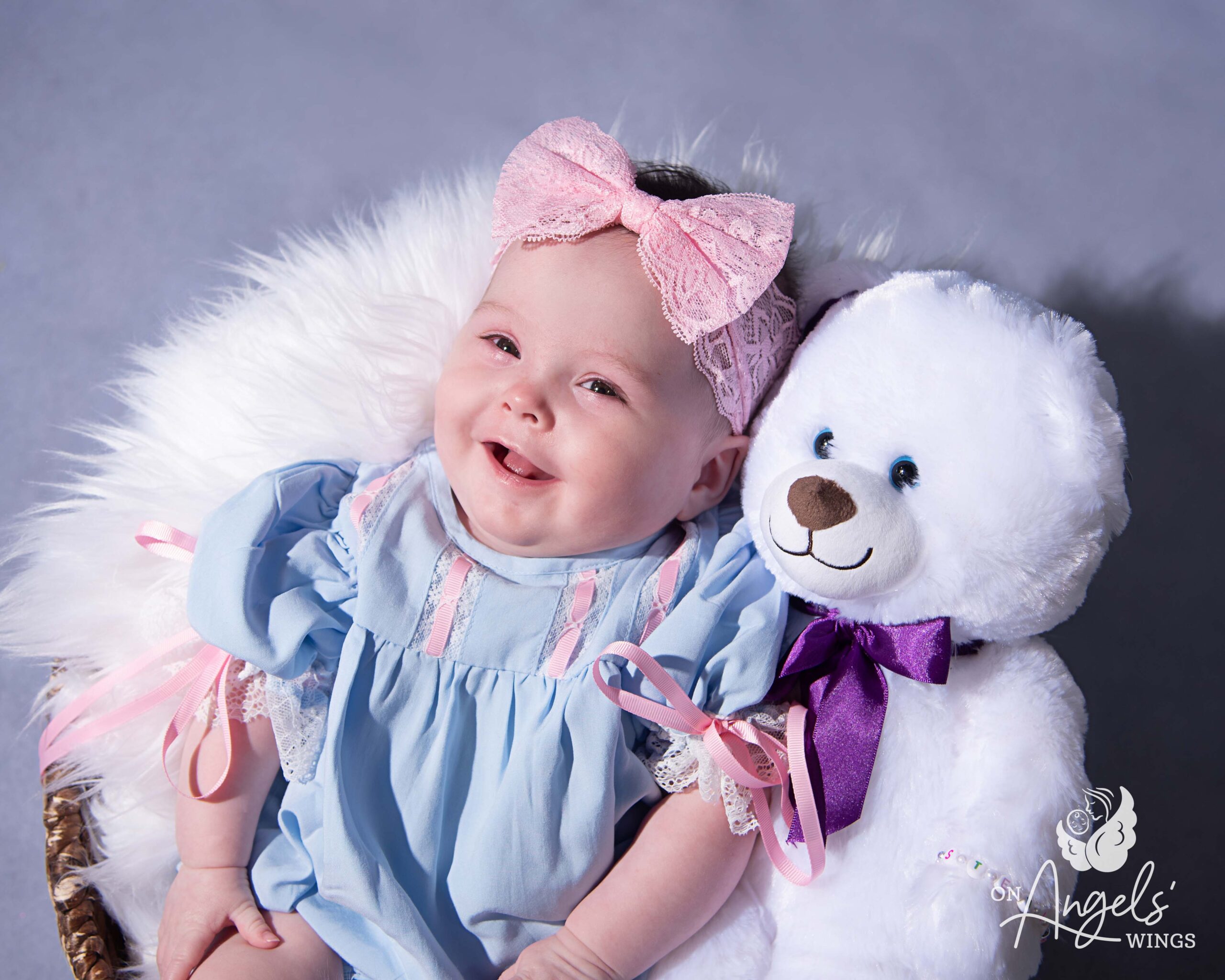
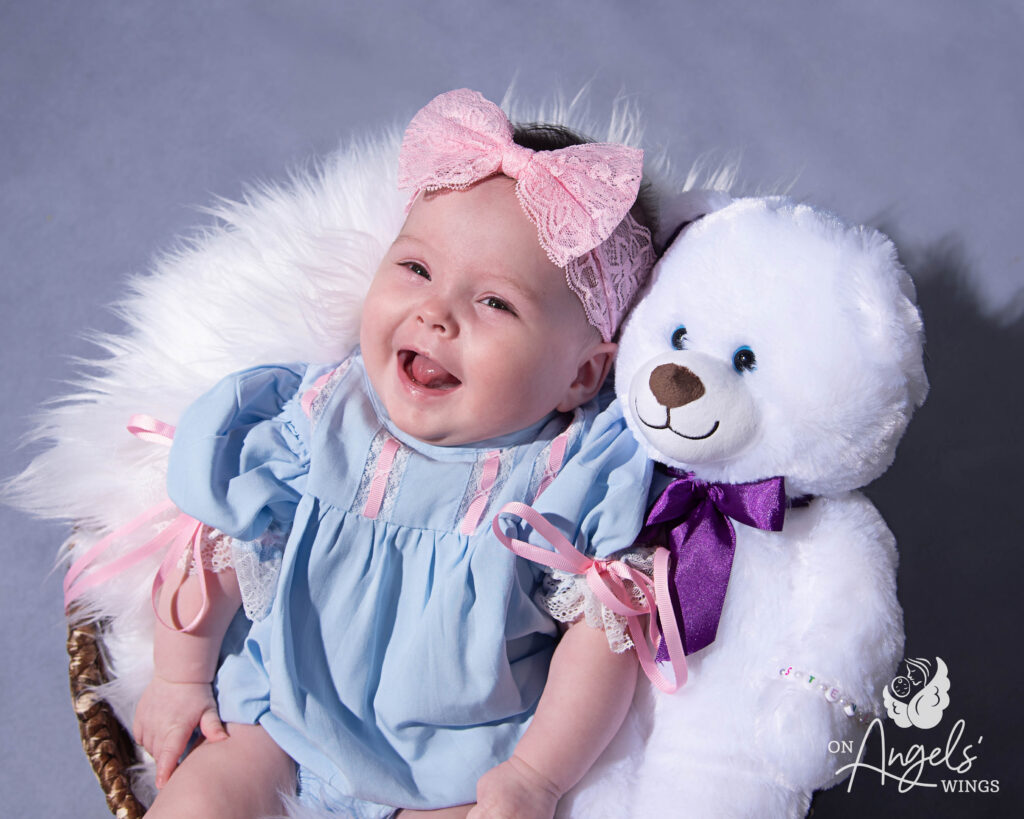
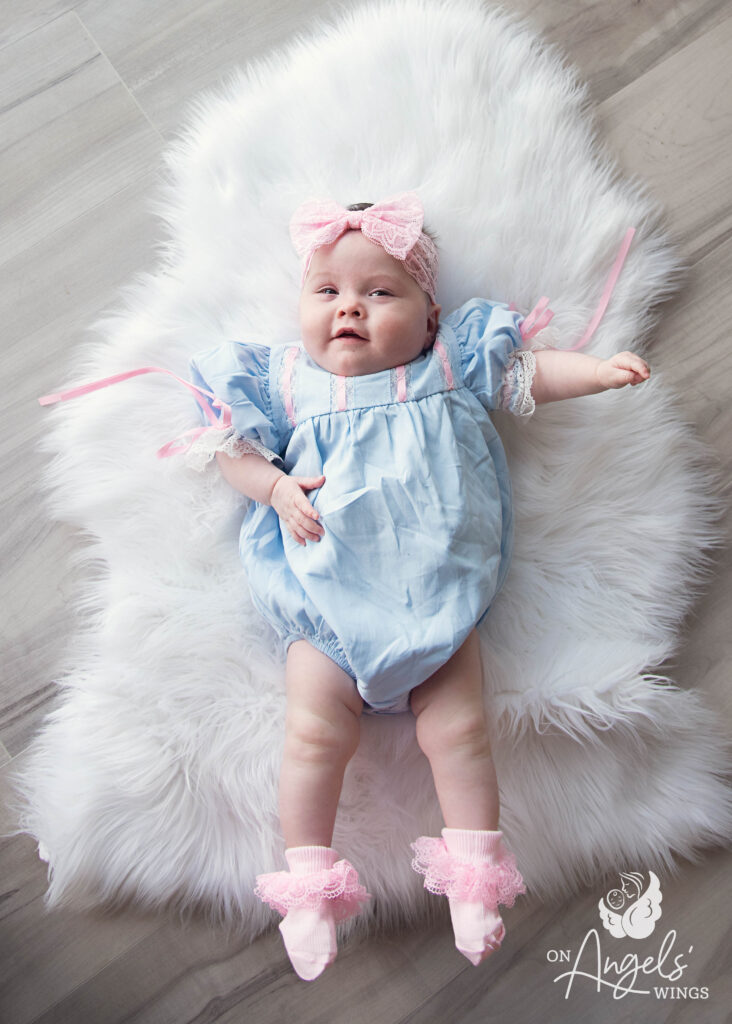
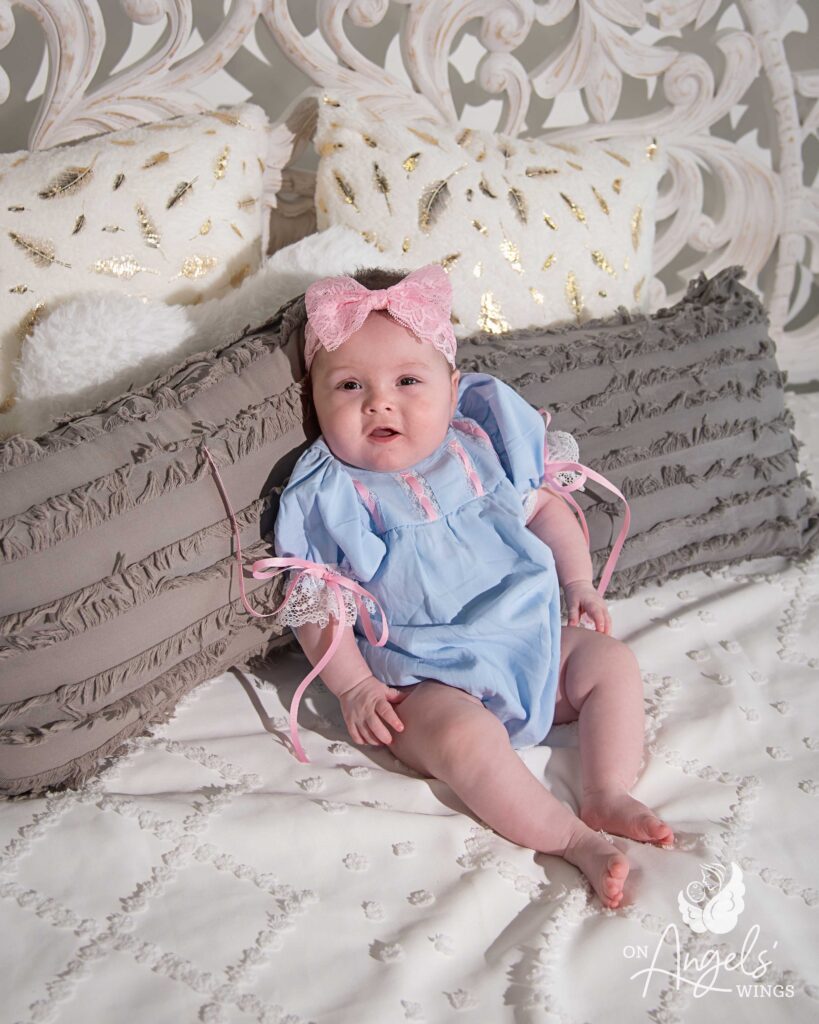
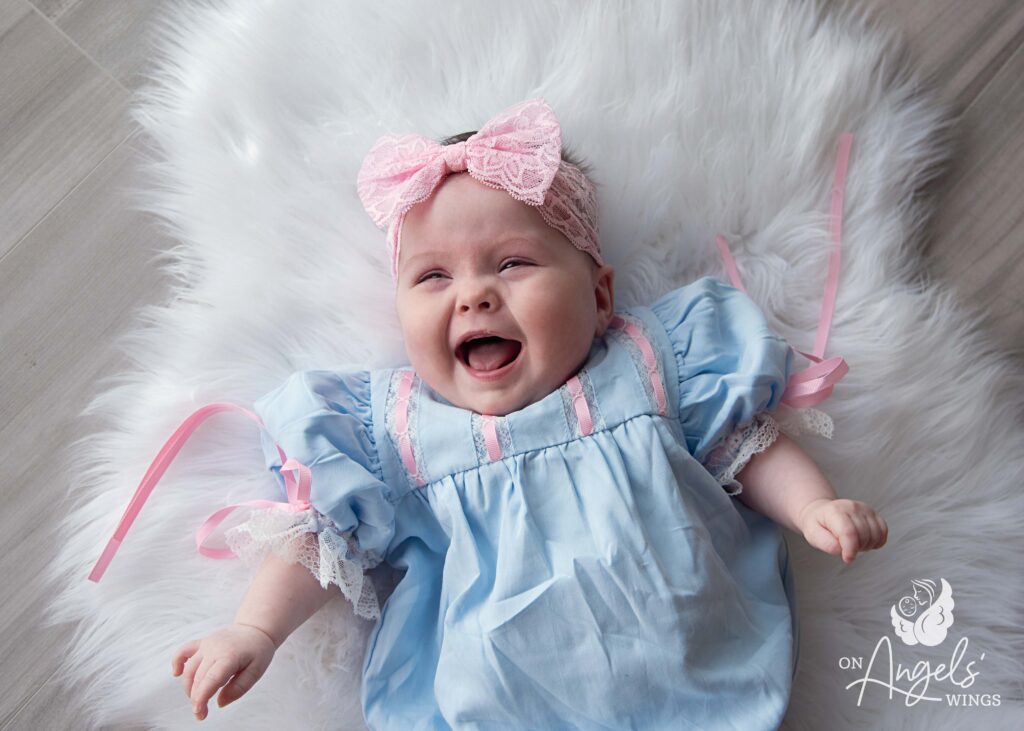
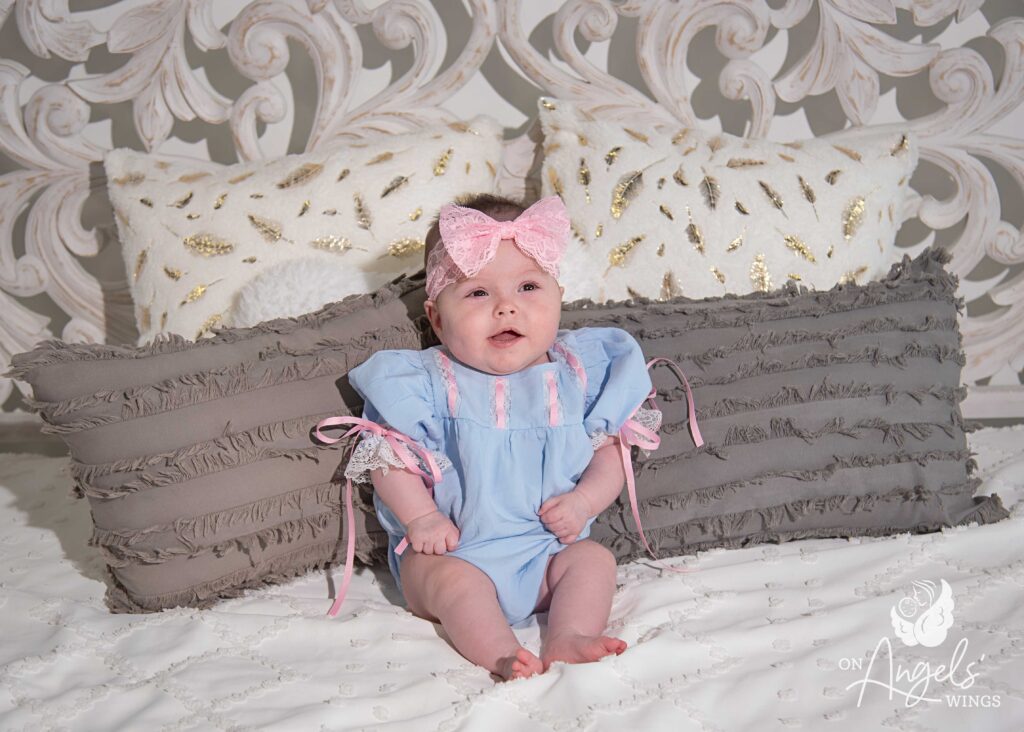
On Angels’ Wings has made a tremendous impact on our family. They documented some of our most vulnerable moments and provided support while we navigated grief, fear, and uncertainty. After we were discharged from the hospital, they reached out to check on us and later arranged progress photos for Stevie.
That meant the world to us.
Because Stevie spent her first seven months in the hospital, we never had the opportunity to take traditional newborn photos. During trauma and crisis, professional photos often don’t feel like a priority, especially when a family is struggling financially because of unexpected medical challenges. We are so grateful that On Angels’ Wings stepped in to document these moments for us with nothing expected in return.
Because of them, we have beautiful photos of our beautiful daughter that we can look back on forever.
On Angels’ Wings is so important for families who are grieving or navigating difficult circumstances because they offer support and services that make you feel seen and understood. Even now, I still receive messages asking how Stevie and our family are doing.
When it feels like the rest of the world has moved on or doesn’t fully understand, On Angels’ Wings continues to make us feel seen, remembered, and cared for.
That is something every family needs during their most vulnerable moments.